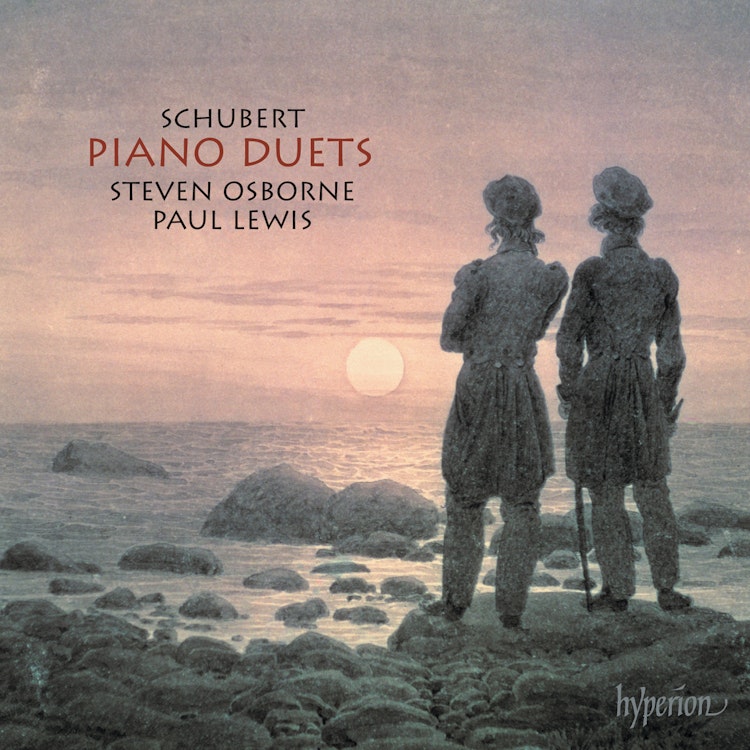
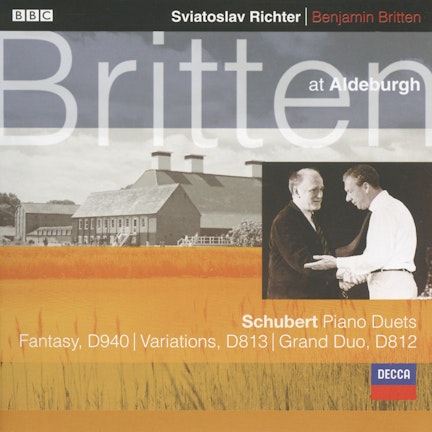
Schubert: Piano Duets (Fantasy in F Minor, Variations etc.)
9/15/2023, 6 Tracks, 1:16:05
Featuring
Paul Lewis
Steven Osborne
Franz Schubert
Did you know?
1/7
Composer's Artistic Vision
Schubert was fascinated by the challenge of unifying sonata movements into a continuous whole, similar to Beethoven's 'quasi una fantasia' sonatas.
Historical Context
Piano duetting was a popular pastime during Schubert's era, and publishing piano duets was more viable than publishing solo piano music.
Composer Biography
Schubert reportedly fell deeply in love with Karoline Esterházy, the younger countess, during his second visit to Zseliz when she was a young woman.
Composer Biography
Schubert composed several significant four-hand works during two extended visits to Hungary, where he worked as a music-master for the daughters of Count Esterházy von Galánta.
Composition History
A publisher divided one of Schubert's large-scale sonatas into two halves, releasing them under different titles and opus numbers, likely to increase sales and disguise its serious nature.
Composition History
Schubert and his composer friend Franz Lachner composed the Fugue in E minor, D952, together in one night for an impromptu performance on the famous organ at Heiligenkreuz Abbey near Vienna.
Compositional Technique
The Fantasie in F minor, D940, incorporates a fugue in its final section, similar to Mozart's F minor Fantasia K608, which was originally for mechanical organ.
You might also enjoy...
Schubert: Klaviermusik zu 4 Händen, Vol. 1
Complete Works for Piano Four Hands - Vol. 4
Schubert: Piano Music for Four Hands, Vol. IV
Schubert: Klaviermusik zu 4 Händen Vol. 7
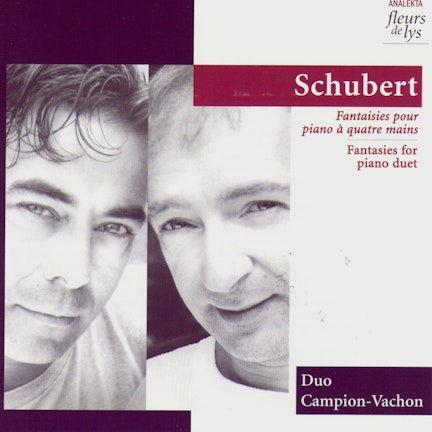
Schubert
Fantasies for piano duet
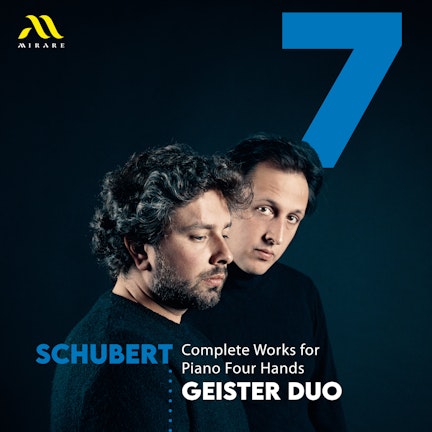
Schubert: Complete Works for Piano Four Hands - Vol. 7
Schubert: Music for Piano Duet
Schubert: Fantasy In F minor For Piano Duet; Grand Duo Sonata in C etc.
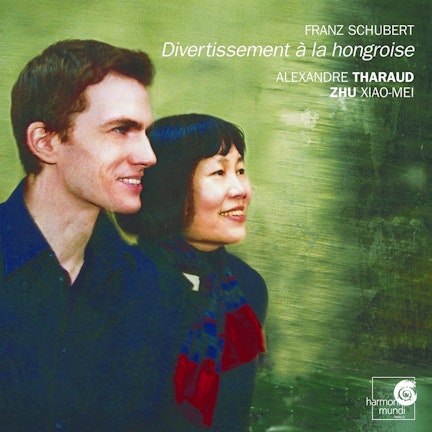
Schubert: Divertissement à la hongroise
Schubert: Piano Works for Four Hands, Vol. 1
Schubert: String Quintet in C major Op. 163 D. 956(Arranged by Hugo Ulrich)