The recording features a unique arrangement of Wagner's 'Das Rheingold' prelude, vocalizing the orchestral parts across 24 spatialized voices.
Historical Context
The album draws on the German imaginative heritage, where fascination with ancestral legends and foundation myths experienced an unprecedented revival in the 19th century.
Instruments
The recording uses period-appropriate horns, including a natural horn by Marcel August Raoux from around 1820 for the Brahms songs, and a copy of a natural horn by Ignaz Lorenz from around 1830.
Album & Artwork
This album, 'Rhinemaidens', is the first part of a trilogy exploring the use of canon in German musical history, focusing on feminine expression.
Composer's Artistic Vision
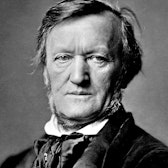
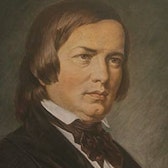
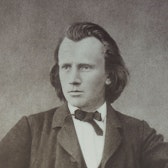
Despite being often portrayed as rivals, Johannes Brahms and Richard Wagner both extensively used the horn and harp, instruments characteristic of their respective artistic visions.
Interpretation
The Ensemble Pygmalion and Raphaël Pichon aim to challenge clichés about German music by exploring foundation myths and presenting composers like Brahms and Wagner as intertwined within a shared tradition.
Compositional Technique
The canon, a compositional technique inherited from Renaissance polyphony and counterpoint, is a central thread uniting the German composers featured on this album.
You might also enjoy...
Josquin Des Pres: Songs and Instrumental Music
The World of Fauré
Bruckner: Works
Cook, J.: From Wonderland to Heaven
Es kommt ein Schiff geladen
Es kommt ein Schiff geladen
Cocktail Classics
Best Of The King's Singers
The Art of the Netherlands
The Art of the Netherlands
Arvo Pärt: Musica Selecta - A Sequence By Manfred Eicher