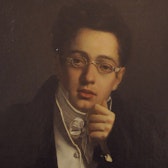
During the 19th century, opinions on Schubert's early symphonies were polarized, with Johannes Brahms dismissing them as 'preliminary works' while Antonín Dvořák ranked them highly for their originality.
Composer's Artistic Vision
Musicologist Susan McClary described sonata form in Schubert's music as the musical equivalent of a Bildungsroman, depicting a young person's intellectual and characterological development.
Compositional Technique
The Second Symphony's first movement is Schubert's longest opening movement before his Great C Major Symphony, featuring an 'overproportioned' sonata form.
Compositional Technique
The Third Symphony's finale is a Perpetuum mobile, a piece dominated by a single metrical movement, structured as a sonata form, and features a Saltarello dance rhythm.
Compositional Technique
The finale of Schubert's Second Symphony quotes a popular street song from the French Revolution, 'Ah! ça ira, ça ira, ça ira!', with a provocative gallop rhythm.
Composer Biography
Schubert began writing his Second Symphony at the age of 17 while working as an assistant teacher at his father's school.
Composition History
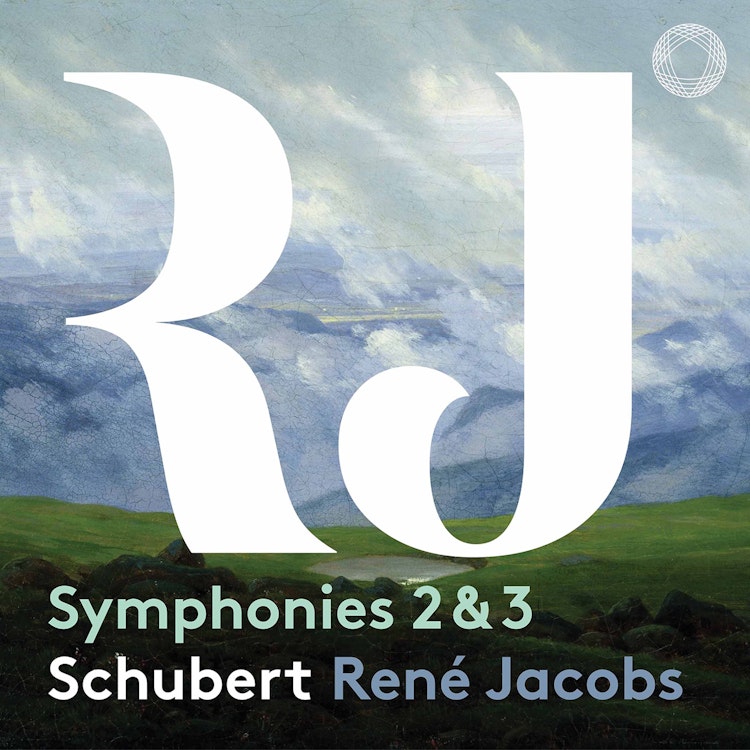
Schubert's Third Symphony, begun only two months after the Second, can be seen as a response to the ambitions of the previous work and has Italianizing traits.
You might also enjoy...
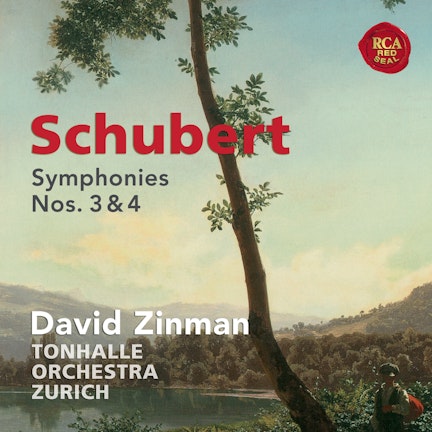
Schubert: Symphonies Nos. 3 & 4
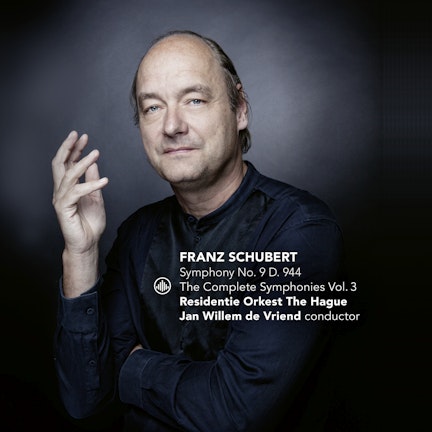
Schubert: The Complete Symphonies Vol. 3: Symphony No.9, D.944
Schubert: Symphony No. 9, D. 944 "The Great"
Schubert: Symphony No. 9 in C Major, D. 944 "The Great"
Schubert: Symphony No. 9, "Great"
Schubert: Symphony No. 9 in C Major, "Great"
Schubert: Symphony No. 1 in D Major, D. 82 / Symphony No. 2 in B-Flat Major, D. 125
Schubert: Sinfonien No. 5 & 6
Schubert: Symphony No. 9
Hans Schmidt-Isserstedt conducts Schubert's The Great
Schubert: Symphony No. 9 in C major, 'The Great', D. 944
Schubert: Symphony No. 8 in C Major, D. 944 "Great"