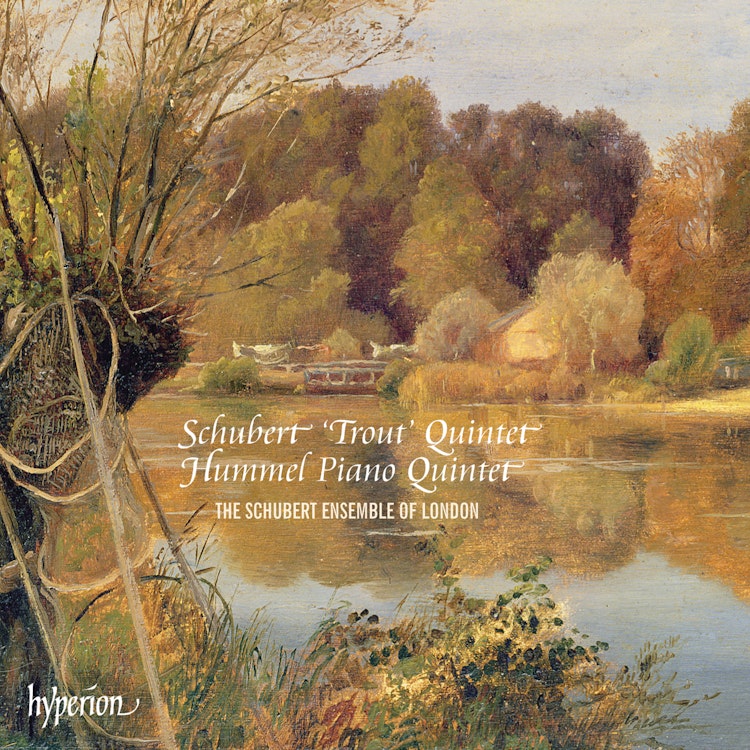
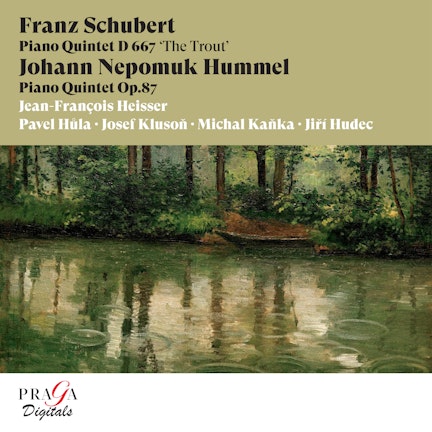
Chamber music, including the works on this album, developed from a tradition of private performances in homes, where friends or family would play for their own enjoyment.
Composition History
Schubert's 'Trout' Quintet was commissioned by Sylvester Paumgartner, a wealthy mine-owner and amateur cellist, who also suggested using Schubert's song 'Die Forelle' as a theme for variations.
Composer Biography
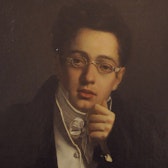
Schubert's social life often revolved around musical soirées, which his friends called 'Schubertiads'—a term still used today for evenings of his music.
Compositional Technique
Schubert's 'Trout' Quintet features sudden switches from major to minor and juxtapositions of keys far apart in the tonal cycle, showcasing the radicalism for which he is known.
Critical Reception
In his own time, Johann Nepomuk Hummel, a composer on this album, was considered more famous than Beethoven.
Composer Biography
Johann Nepomuk Hummel, a composer featured on this album, was a pupil and close friend of Mozart and also studied with Albrechtsberger and Salieri, who were also Beethoven's teachers.
Composition History
Hummel's Piano Quintet, composed in 1802, was not published until 1822, meaning Sylvester Paumgartner (who commissioned Schubert's 'Trout' Quintet) must have known it in manuscript form when he cited it as an example for Schubert.