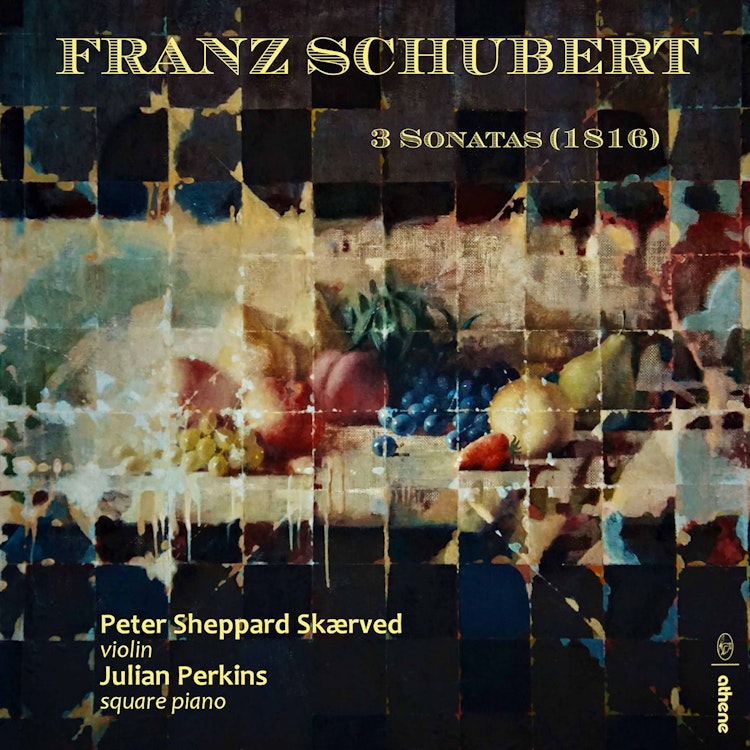
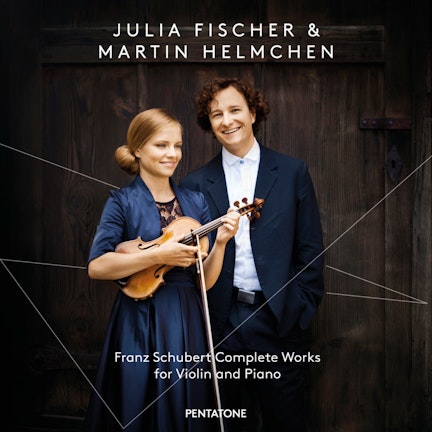
When the pieces were published twenty years after their composition, the publisher Anton Diabelli presented them as 'Three Sonatinas Op 137', implying they were for amateur musicians.
Instruments
The piano used is a square piano by Clementi & Co., London, 1812, known for its clear, 'fluty' sound compared to other English pianos.
Instruments
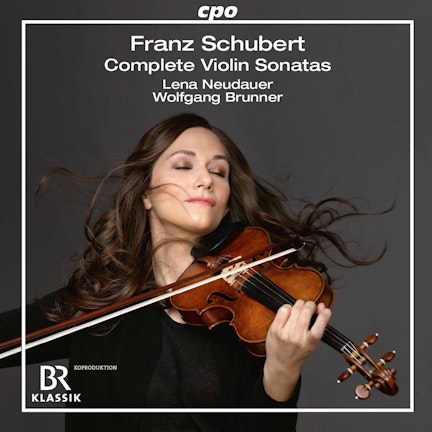
The violin used in this recording is a Leopold Widhalm (1722-1776), a German maker whose instruments were highly regarded and often compared to those of Jacob Stainer.
Interpretation
The performers approach Schubert's scores not as 'Urtext' editions, but as 'Blurtext' editions, allowing for creative interaction such as swapping lines on repeats, adding ornamentation, and cadenzas.
Composer's Artistic Vision
Schubert's three Sonatas for piano and violin demonstrate an aesthetic choice for 'classical economy of means', reflected in their structure and the balanced weaving of the two instruments.
Instruments
The bow used is a very early and unusual example by the famous French maker, Francois Xavier Tourte, probably made around 1770-1780, and is an interesting precursor to the modern bow.
Composition History
Schubert's three Sonatas for piano and violin were written in the spring of 1816, with the first two dated 'March 1816' and the last 'April of the same year'.
You might also enjoy...
Chopin: Nocturne No. 16 in E-Flat Major, Op. 55 No. 2 (Arr. Heifetz for Violin & Piano)