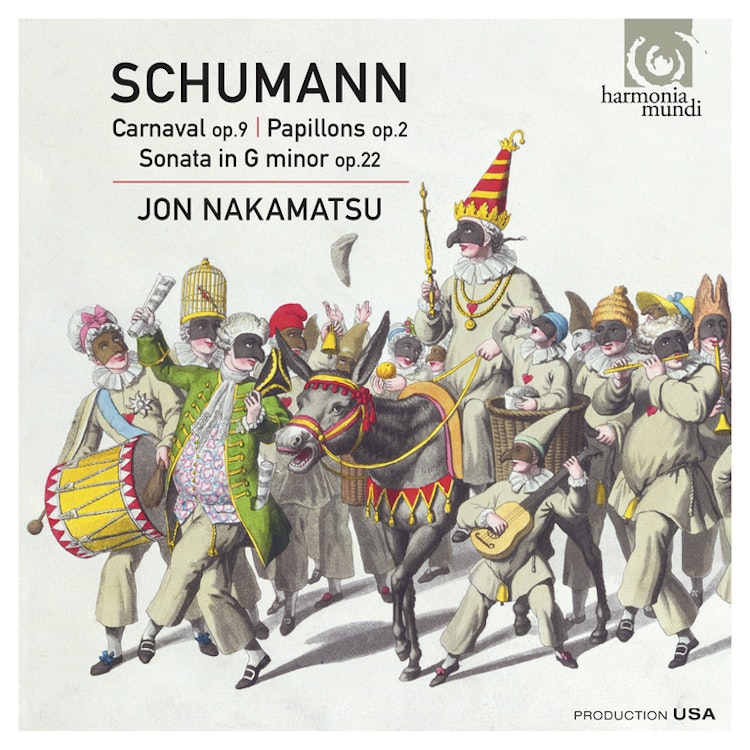
Schumann: Carnaval, Op. 9 - Papillons, Op. 2 - Sonata in G Minor, Op. 22
3/24/2014, 37 Tracks, 1:05:28
Featuring
Jon Nakamatsu
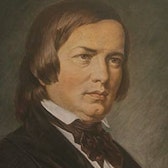
Robert Schumann
Did you know?
1/7
Recording & Production
This album was recorded in December 2012 at The American Academy of Arts and Letters in New York, using a Hamburg Steinway Model D 0410 piano.
Composition History
The Piano Sonata No. 2 in G minor, Op. 22, was composed over several years in the 1830s, with Schumann substituting the current Rondo for an earlier Presto passionato in 1838.
Composer's Artistic Vision
Schumann created a fictional society called the Davidsbund, a 'band of brothers' united against musical and cultural philistinism, which permeated his music.
Composer Biography
Robert Schumann, the composer, used alter egos named Florestan (outspoken and impulsive) and Eusebius (introverted) in his music and writing.
Compositional Technique
Schumann's Carnaval, Op. 9, revolves around four notes (E-flat, C, B, A, or S-C-H-A in German notation) which form the core musical material, generating motifs and tonal structure.
Performer Biography
Jon Nakamatsu, the pianist on this album, and clarinetist Jon Manasse are Artistic Directors of the Cape Cod Chamber Music Festival.
Performer Biography
Pianist Jon Nakamatsu won the Gold Medal at the 1997 Van Cliburn International Piano Competition.