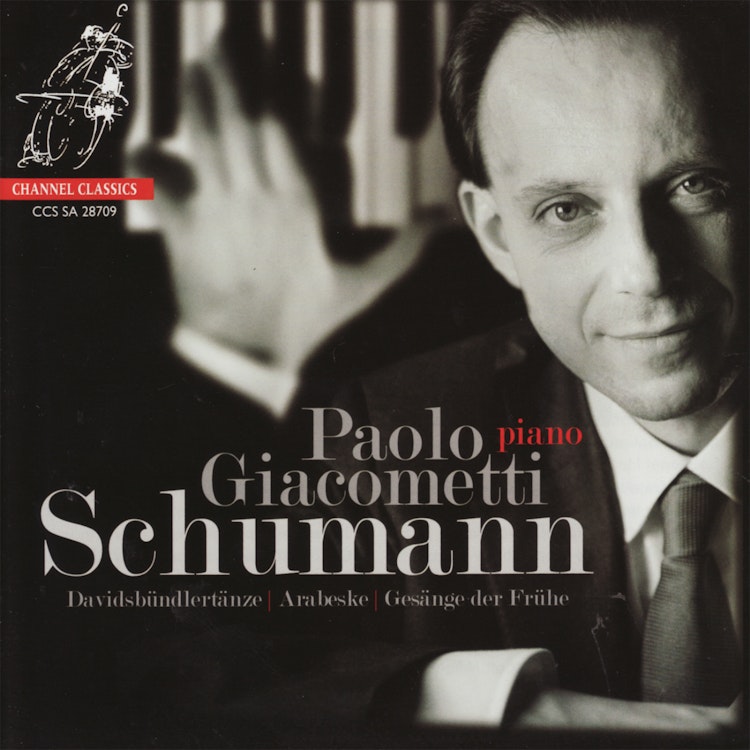
The Gesänge der Frühe, composed in 1853, were Schumann's last works before he was confined to an asylum, following years of increasing emotional problems.
Recording & Production
This album was recorded in September 2008 at Muziekcentrum Frits Philips in Eindhoven, The Netherlands, using Bruel & Kjaer 4006 and Schoeps microphones.
Compositional Technique
The Davidsbündlertänze feature Schumann's two alter egos, Florestan (extroverted and wild) and Eusebius (intimate and shy), with each of the eighteen dances signed by one or both characters.
Composer's Artistic Vision
Schumann invented the 'league of David' as a way to fight against what he considered cheap, excessively virtuosic, and superficial contemporary musical trends.
Composition History
Schumann composed the Davidsbündlertänze in 1837, inspired by his secret engagement to Clara Wieck and his imaginary 'league of David'.
Performer Biography
Paolo Giacometti, the pianist on this album, performs internationally as both a soloist and chamber musician on period and modern instruments.
Performer Biography
Pianist Paolo Giacometti records exclusively for Channel Classics, and his discography has received international acclaim.