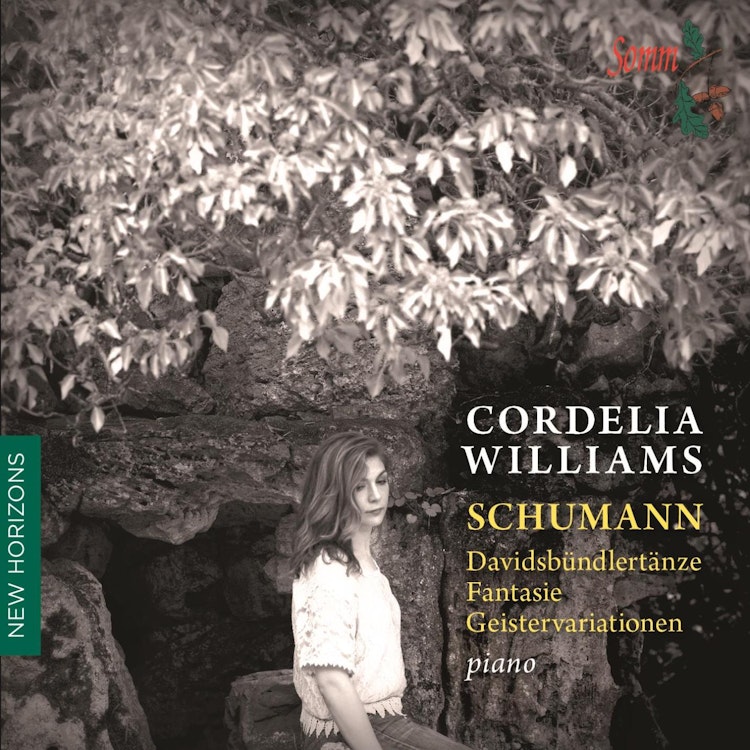
Schumann: Davidsbündlertänze, Op. 6, Fantasie in C Major, Op. 17 & Geistervariationen, WoO 24
3/25/2016, 27 Tracks, 1:17:05
Featuring
Cordelia Williams
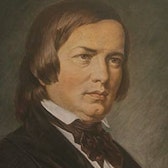
Robert Schumann
Did you know?
1/7
Composer's Artistic Vision
Schumann's early piano works often incorporated musical codes, such as his 'Abegg' Variations, Op. 1, which used notes derived from the name Pauline von Abegg.
Composer Biography
Schumann, as a young man, considered a career in literature and founded the music journal Neue Zeitschrift für Musik in 1834.
Performer Biography
Pianist Cordelia Williams won the BBC Young Musician competition in 2006 and has performed with orchestras like the London Mozart Players and Royal Northern Sinfonia.
Composition History
Schumann's final piano composition, the 'Geistervariationen' (Ghost Variations), was written in February 1854, on a theme he believed was dictated to him by angels, shortly before he was committed to an asylum.
Composer Biography
Robert Schumann, the composer, was born in 1810, around the same time as fellow piano masters Mendelssohn, Chopin, and Liszt.
Composition History
The Fantasie in C major, Op. 17, was written in response to an idea by Franz Liszt to raise money for a monument to Beethoven in his birthplace, Bonn.
Compositional Technique
The Fantasie in C major, Op. 17, includes subtle musical quotations, such as a theme from Beethoven's song-cycle An die ferne Geliebte, and coded references to Clara Wieck, Schumann's future wife.
You might also enjoy...
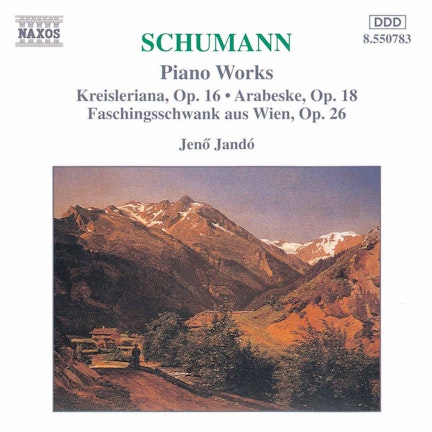
Schumann, R.: Kreisleriana / Faschingsschwank Aus Wien
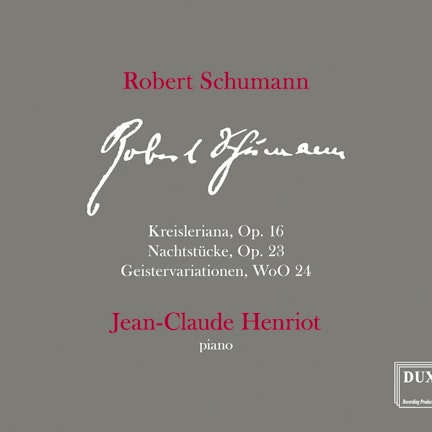
R. Schumann: Kreisleriana, Nachtstücke & Thema mit Variationen "Geistervariationen"