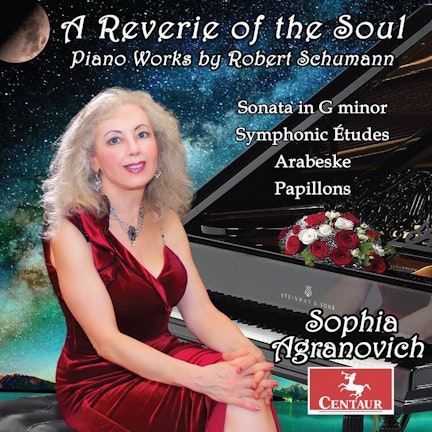
Robert Schumann, the composer, was forced to abandon his dream of being a pianist after injuring his hand.
Composition History
Schumann published his Piano Sonata No. 1, Op. 11, dedicated to Clara Wieck, under the pseudonyms Florestan and Eusebius, representing his different personalities.
Composer's Artistic Vision
Robert Schumann, the composer, used the imaginary league of Davidsbündler in a music journal he edited to counter conservative 'Philistines' in the musical world.
Performer Biography
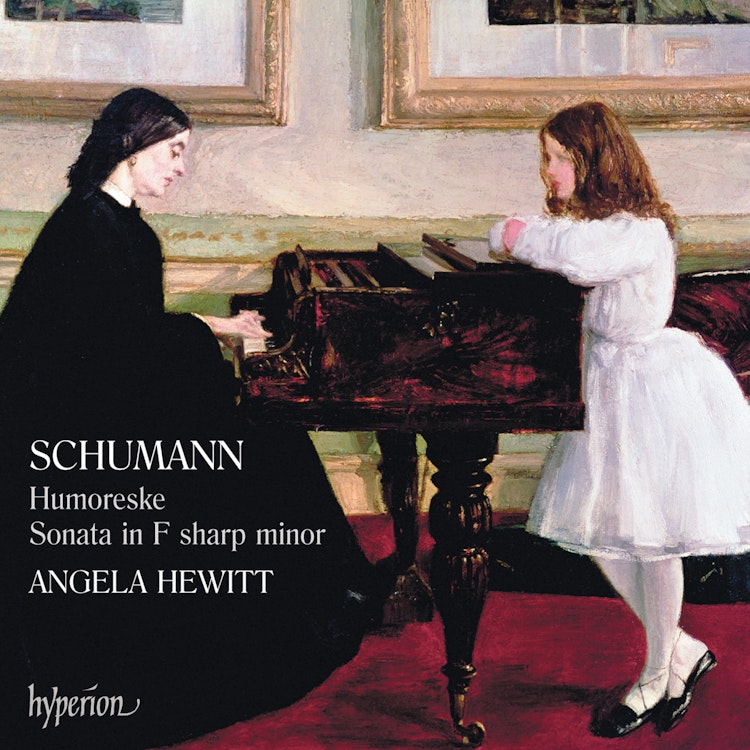
Angela Hewitt, the pianist on this album, was awarded the first ever BBC Radio 3 Listener's Award in 2003 and was voted Gramophone's 'Artist of the Year' in 2006.
Compositional Technique
A five-note falling scale, identified as Clara Wieck's theme, appears throughout Schumann's Piano Sonata No. 1, Op. 11, and in other works of his.
Compositional Technique
The opening motif of Schumann's Piano Sonata No. 1, Op. 11, comes from Clara Wieck's composition 'Le ballet des revenants' and incorporates a fandango rhythm from one of Robert Schumann's unfinished works.
Composer's Artistic Vision
Robert Schumann believed his compositions were sometimes difficult to understand because they were connected to diverse interests, and striking due to extraordinary events impressing him.
You might also enjoy...
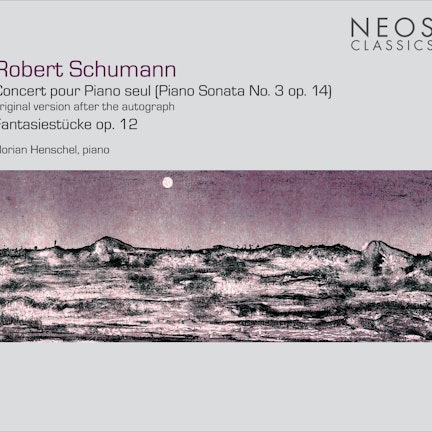
Robert Schumann: Concert pour piano seul - Piano Sonata No. 3, Op. 14 - Fantasiestücke
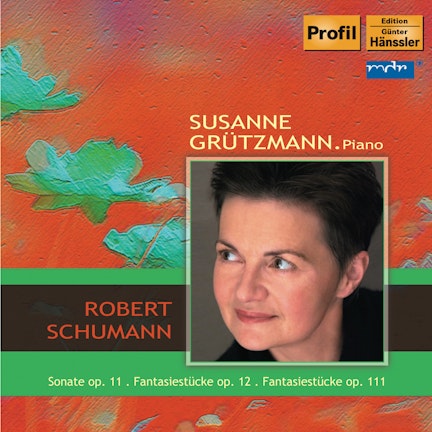
Schumann: Piano Sonata No. 1 in F-Sharp Minor, Op. 11 & Fantasiestücke, Op. 12