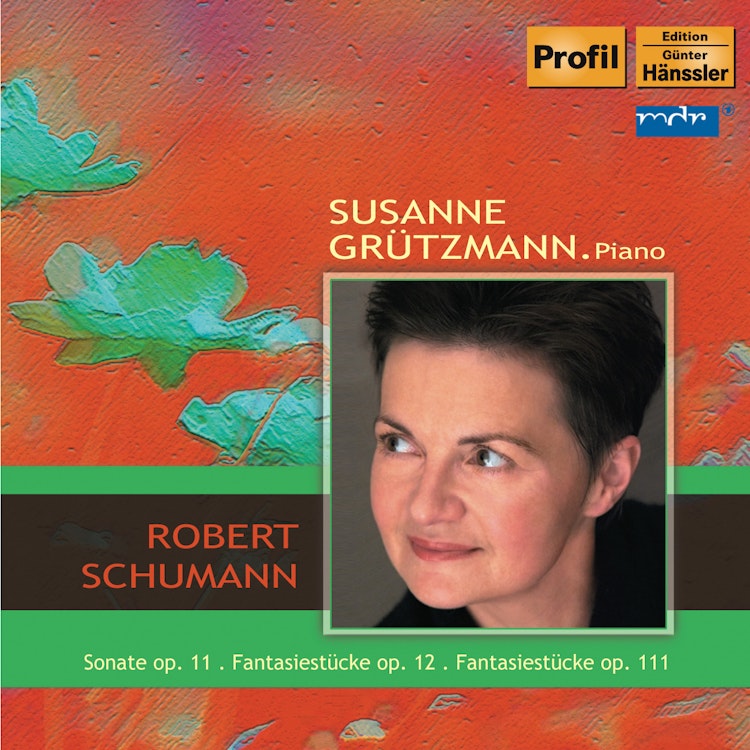
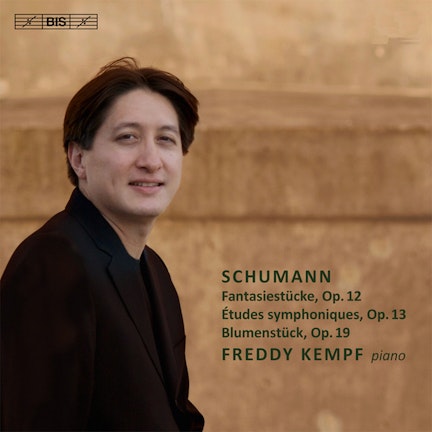
Susanne Grützmann, the pianist on this recording, won first prize at the prestigious ARD Competition in Munich in 1989.
Composer's Artistic Vision
Schumann's music is deeply influenced by literature and poetry, making it poetic, narrative, and descriptive.
Recording & Production
This recording was made at the MDR-Studio am Augustusplatz, Leipzig, between July 13 and July 16, 2009.
Compositional Technique
Schumann often preferred smaller forms, compiling individual pieces into sets like the Fantasiestücke, rather than focusing on large-scale sonatas.
Composer's Artistic Vision
Schumann often used two imaginary figures, Florestan and Eusebius, to represent the fiery and gentle sides of his personality in his music and critical writings.
Composer Biography
Schumann damaged his fourth finger in an attempt to achieve complete independence of each finger, which ended his aspirations for a virtuoso piano career.
Composer Biography
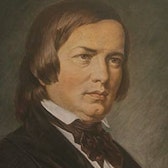
Robert Schumann, the composer, had three talents: music, literature, and piano, but he ruined his pianistic abilities through an overambitious experiment.
You might also enjoy...
R. Schumann: Piano Works
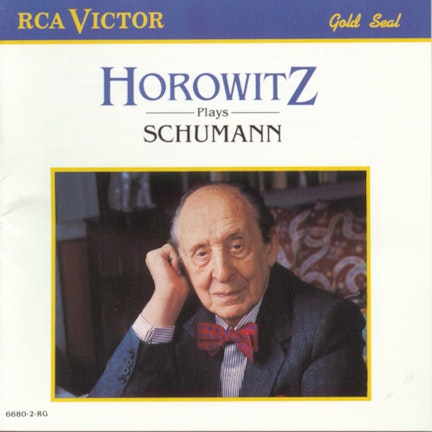
Horowitz Plays Schumann
Schumann: Humoreske and Fantasiestucke
Schumann: Piano Quintet in E-Flat Major
Volume 10 - Schumann II
Schumann: Kreisleriana, Op. 16; Arabesque, Op. 18; Träumerei; Variations on a Theme by Clara Wieck; Toccata in C Major, Op. 7; Blumenstück, Op. 19