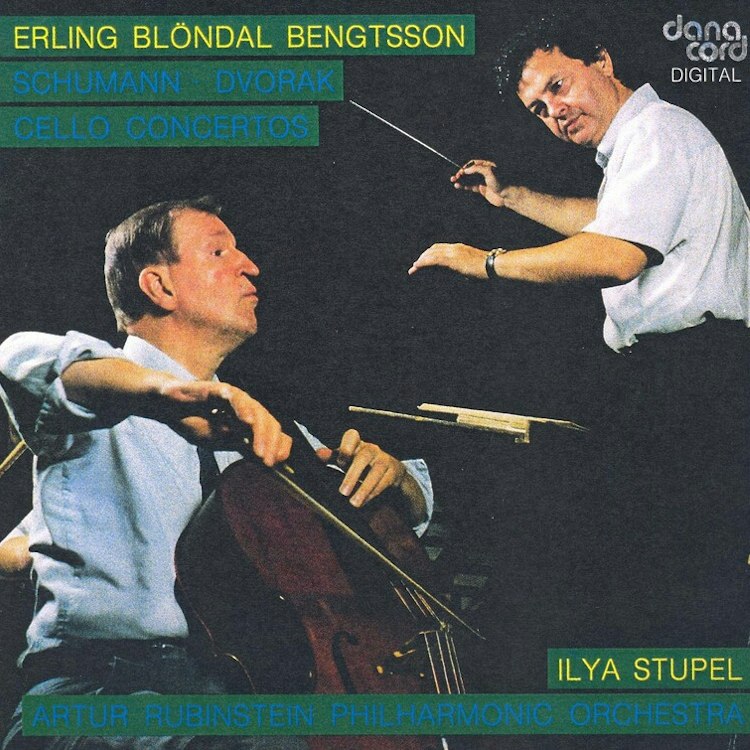
Schumann, R.: Cello Concerto in A Minor / Dvorak, A.: Cello Concerto in B Minor
1/1/1993, 6 Tracks, 1:07:10
Featuring
Ilya Stupel
Erling Blöndal Bengtsson
Arthur Rubinstein Philharmonic Orchestra
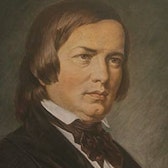
Robert Schumann
Antonín Dvořák
Did you know?
1/7
Composer Biography
Antonín Dvořák, despite not having a particular predilection for the cello, composed what became the best-loved cello concerto of all.
Compositional Technique
The slow movement of Dvořák's Cello Concerto quotes one of his own songs, a favorite of his wife's sister, who was Dvořák's first great love.
Composer's Artistic Vision
Robert Schumann, a great admirer of the cello, aimed to integrate the solo part into the orchestra rather than creating a grand virtuoso concerto.
Compositional Technique
Schumann's Cello Concerto is in three movements without breaks, and the movements are thematically interrelated, resembling a "fantasia" for cello and orchestra.
Performer Biography
Erling Blöndal Bengtsson, the cellist on this recording, was called a child prodigy and gave his first public recital on a viola with an end-pin at age three.
Composition History
Dvořák's Cello Concerto was composed during his tenure as conservatoire principal in New York in 1894 and 1895, though he revised the finale after returning to Prague.
Performer Biography
Ilya Stupel, the conductor, was a child prodigy who started playing piano at age three and grew up in a family with rich musical traditions.