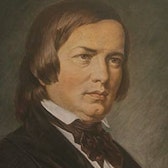
For about a century after his death, Robert Schumann's later works were often dismissed as less inspired and weaker, believed to show signs of his tragic illness.
Composer's Artistic Vision
Schumann believed that the 'early' and 'late' periods of his composition differed not due to a flaw, but because he was committed to an aesthetic of originality, constantly seeking new compositional paths.
Compositional Technique
Schumann created piano accompaniments for Bach's solo violin and cello works, not as a stylistic error, but to make the music accessible to a wider audience and to reveal its 'hidden treasure'.
Instruments
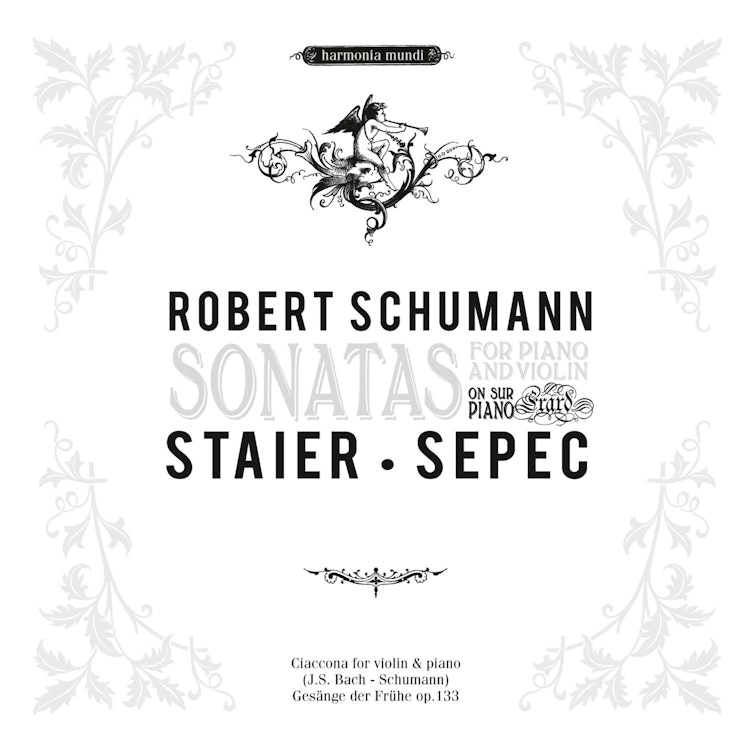
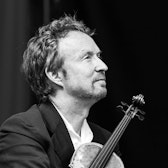
The pianist, Andreas Staier, chose an 1837 Erard grand piano for this recording because Clara Schumann frequently played Erard instruments on her concert tours.
Compositional Technique
In his Second Violin Sonata, Schumann used the dedicatee's name, David, as a 'soggetto cavato' (a musical motif derived from letters) for the first movement, using the notes D-A-F-D.
Composition History
Schumann's Second Grand Sonata for Violin and Pianoforte is dedicated to Ferdinand David, a violinist whose public performances with Felix Mendelssohn Bartholdy inspired Schumann's own harmonizations of Bach.