Schumann compared the variations in his Symphonic Studies to 'panes assembled from colored glass,' which made the surroundings appear in different hues.
Performer Biography
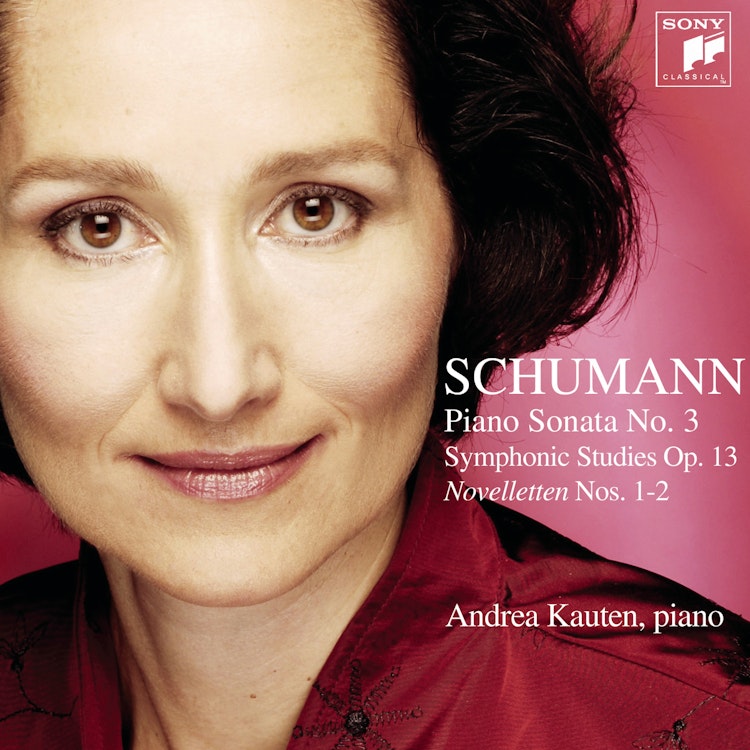
Andrea Kauten, a Hungarian-Swiss pianist, began playing piano at age seven and was a finalist in the Jecklin Competition in Zürich by age 13.
Composition History
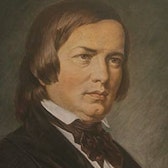
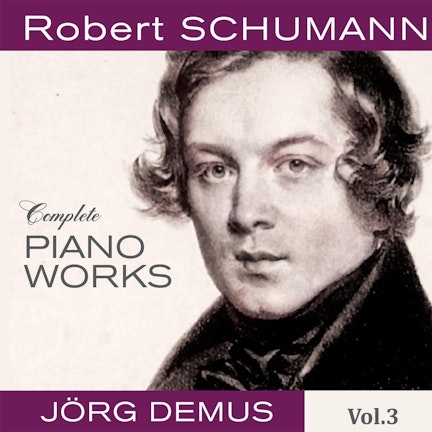
Robert Schumann began composing his Symphonic Studies, also known as Etudes in the Orchestral Character of Florestan and Eusebius, in 1833, and they were published in 1837.
Composition History
Schumann's Novelletten, composed in 1838, were described by him as 'fairly long and interlinked tales of adventure' or 'musical letters' to Clara.
Performer Biography
Andrea Kauten studied at the Franz Liszt Music Academy in Budapest, a renowned institution that has trained many world-famous artists like András Schiff.
Composer Biography
In his F-minor Sonata, Op. 14, Schumann paid homage to Clara, his beloved, by using one of her themes as the basis for the slow movement.
Composition History
Schumann revised his F-minor Sonata, Op. 14, over ten years after its creation, settling on the final number of movements and removing its original subtitle, 'Concerto without Orchestra.'