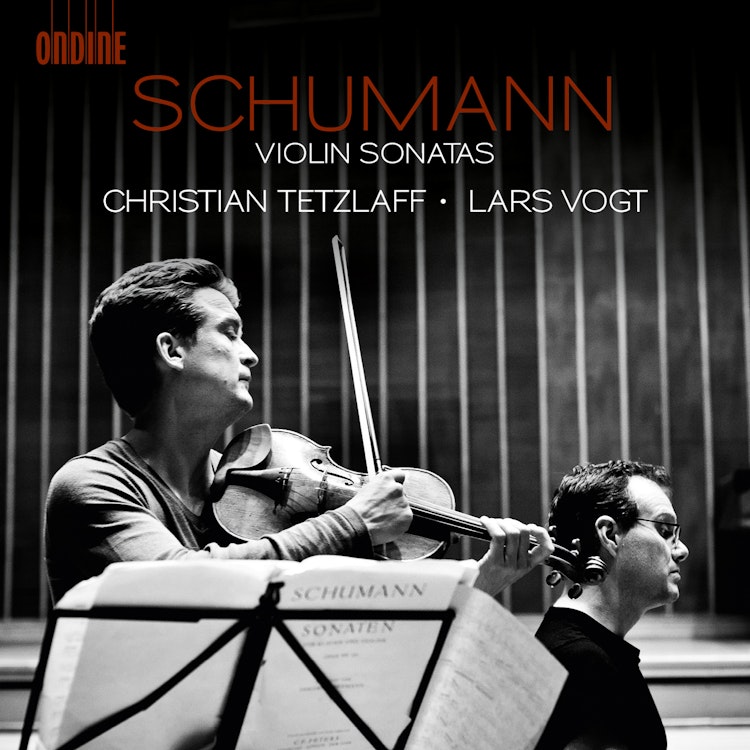
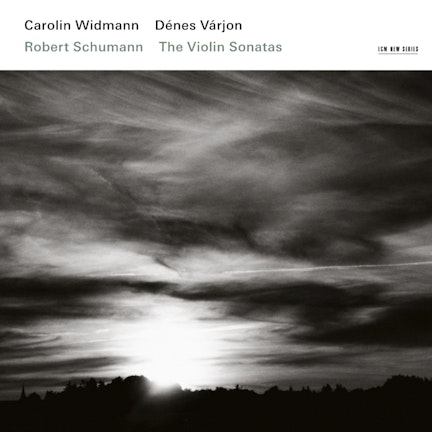
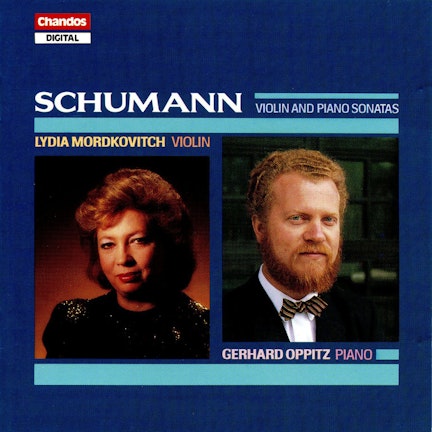
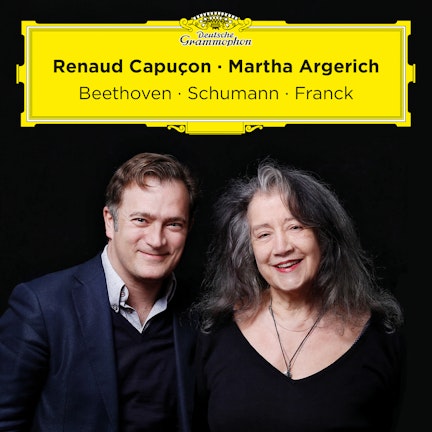
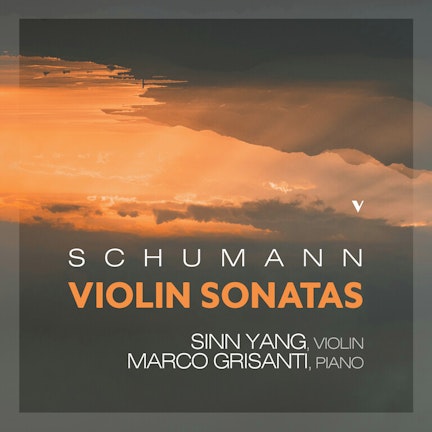
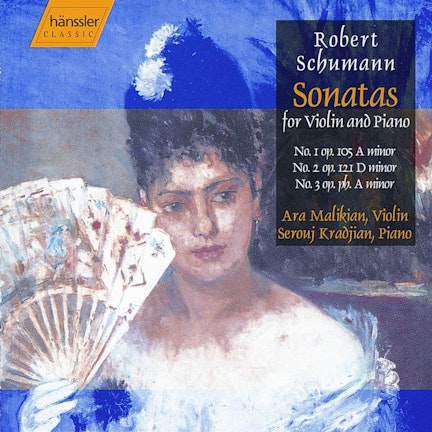
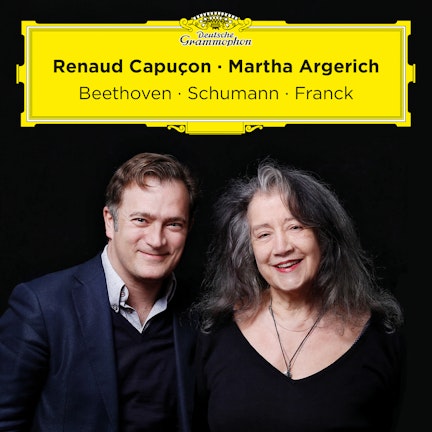
Schumann's late works deliberately reject music appealing to popular taste, focusing instead on expressing "extreme and extremely beautiful things" with an "idiosyncratic, distinctive language."
Critical Reception
Clara Schumann and Johannes Brahms prevented the publication of Schumann's Third Violin Sonata in the complete edition of his works; it was not published until 1956.
Composer Biography
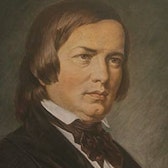
Robert Schumann's late works, including the violin sonatas on this recording, are often underrated and under-represented in concert repertoire due to his tragic end in a sanatorium.
Compositional Technique
Schumann incorporated an anagram of Ferdinand David's surname (D-A-F-D) into the first movement of his Second Sonata, also referencing the head motif of Bach's Art of Fugue.
Composition History
The Third Violin Sonata originated from the 'F.A.E.' Sonata, a collaborative work by Schumann, Albert Dietrich, and Johannes Brahms, composed for violinist Joseph Joachim.
Interpretation
Pianist Lars Vogt found Schumann's metronome markings for the fast tempos to be very moderate, allowing for a deeper exploration of the complex and polyphonic piano parts.
Composition History
The idea for Schumann's violin sonatas may have come from Ferdinand David, concertmaster of the Leipzig Gewandhaus Orchestra, who wrote to Schumann in 1850 suggesting he compose for violin and piano.