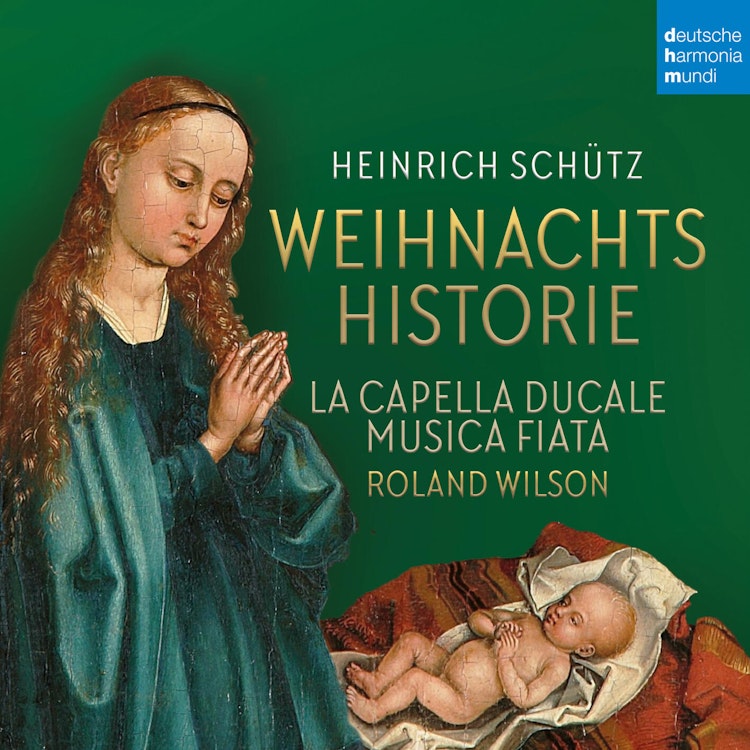
This recording presents Schütz's final revised version of the Weihnachtshistorie, which exists in several overlapping versions.
Compositional Technique
For each of the eight intermedien in the Weihnachtshistorie, Schütz chose specific instrumentation, such as recorders for the shepherds and four low voices with trombones for the high priests, reflecting what was available at the Dresden court.
Composer's Artistic Vision
The collection Geistliche Chormusik from 1648, which includes three pieces on this recording, was designed by Schütz to encourage young composers to learn polyphonic writing before moving to the newer concertierenden Stylus.
Critical Reception
Heinrich Schütz's Christmas Historia is one of the most performed pieces of music before Bach, and for many non-German listeners, it is often the only composition by Schütz they have heard.
Compositional Technique
Schütz's Magnificat, like Monteverdi's, is a continuous movement with clearly defined, contrasting sections that use all possible combinations of singers and instruments to interpret the text.
Composition History
The Evangelist's recitatives and continuo accompaniment for the Weihnachtshistorie were printed in 1664, but the intermedien (interludes) were omitted because Schütz believed his creative work would not achieve its intended impact outside of well-appointed princely ensembles.
Composition History
The Berlin manuscript of the Weihnachtshistorie, containing the final version of the recitatives and improved intermedien, was discovered in the 1930s but disappeared after 1945 as spoils of war, only to be returned to Berlin in 2001.
You might also enjoy...
Charpentier: Leçons de ténèbres, Litanies & Magnificat
Heinrich Schütz Edition
Meder: Sacred Cantatas
Charpentier: Te Deum, Beatus vir, Tenebrae factae sunt & Seniores populi
Humfrey: Verse Anthems
Purcell: Divine Hymns
Purcell: Complete Sacred Music
Bach 333: 4-Parts Chorales
Lo zuane tedesco
Musica Sacra nella Napoli del '700
Charpentier, M.-A.: Sacred Music, Vol. 3
O Sing Unto the Lord: Sacred Music by Henry Purcell