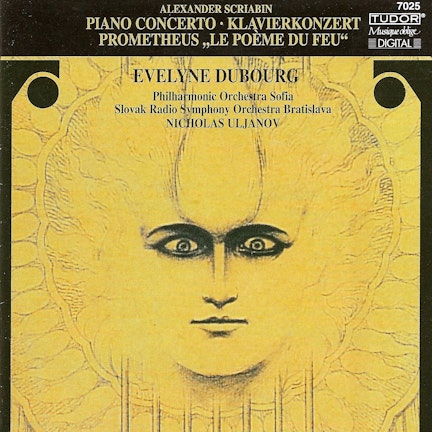
Viacheslav Molotov, later a stone-hard pact partner of Ribbentrop, was Alexandr Scriabin's nephew, though he adopted 'Molotov' as a nom de guerre, meaning 'hammer'.
Instruments
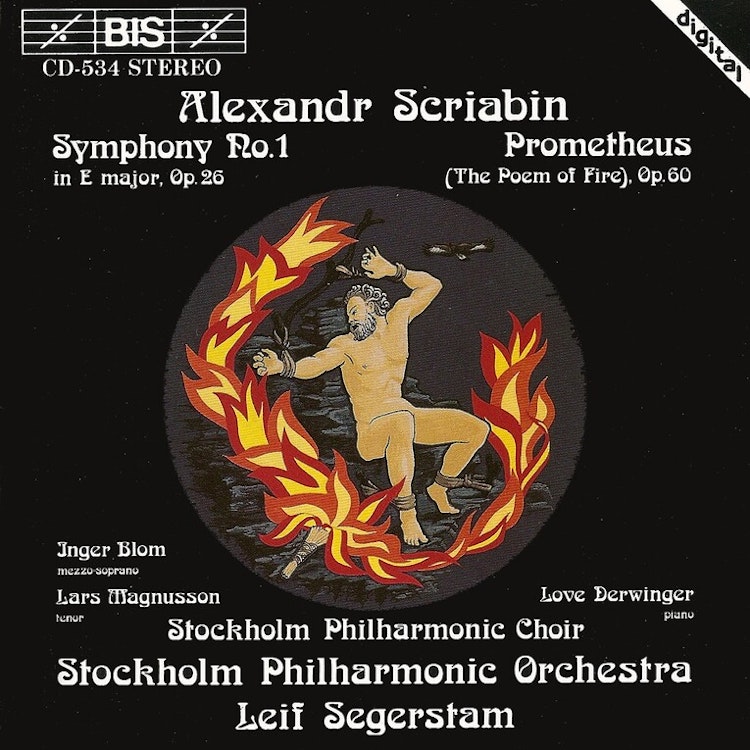
Scriabin's Prometheus (The Poem of Fire) includes a 'light keyboard' or 'colour organ' (sletluata klattiatura) that flooded the concert hall with different colors, though its notation remains largely a riddle.
Composer Biography
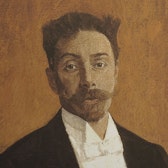
The well-known English author Sir Osbert Sitwell described Alexandr Scriabin's appearance during a 1914 visit to London as resembling a thin, grey, careworn German professor.
Composition History
Scriabin's First Symphony was generously supported by Mitrofan Belyayev, an industrialist and music patron who also owned a significant music publishing house.
Composition History
The premiere of Scriabin's First Symphony in St. Petersburg in 1900 omitted the final movement due to practical problems, as predicted by his patron Belyayev.
Composer's Artistic Vision
Scriabin's First Symphony, despite being within Russian tradition, is one of his first works to bring his unique psychological and ethical thought processes to the forefront.
Compositional Technique
Scriabin's Prometheus (The Poem of Fire) employs a new harmony system that largely departs from traditional major/minor, based on the interval of a fourth and featuring a 'Prometheus chord' (C - F sharp - B flat - E1 - A1 - D2).
You might also enjoy...
Valentin Silvestrov: Orchestral Works
Lutosławski: Orchestral Works IV
Daniel Börtz: Double Concerto for One
Wolf-Ferrari: Sinfonia Da Camera / Strauss-Schoenberg: Kaiserwalzer / Bloch: 4 Episodes
Weinberg: Clarinet & Chamber Works
Valentin Silvestrov: Symphony No. 2 & Symphony for Cello and Chamber Orchestra, Meditation
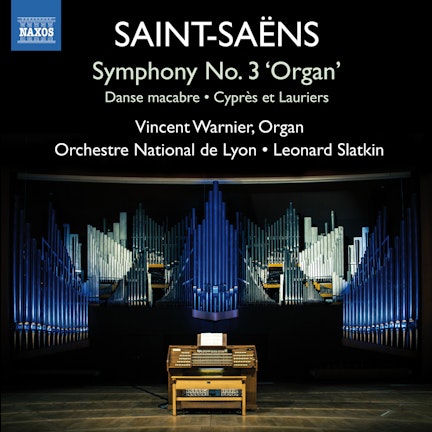
Saint-Saëns: Works for Organ & Orchestra
The River of Time
Ross Harris: Symphony No. 6 "Last Letter" & Face (Live)