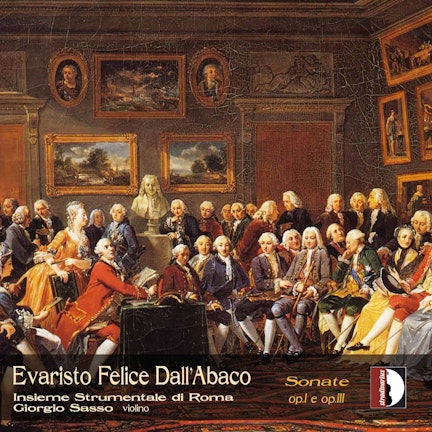
The sonata could be performed in private 'chamber' settings (da camera), often featuring dance-named movements, or in 'church' contexts (da chiesa) with abstract titles to avoid dance evocations.
Historical Context
The 17th and early 18th centuries were crucial for developing an instrumental language for the violin, distinguishing it from other instruments while incorporating human voice imitation and dance rhythms.
Instruments
Early sonatas from the 1610s in Northern Italy were composed for the magnificent violins made in the Po Valley by famous families like Amati, Guarneri, and Stradivari.
Cultural Impact
Dances like the chacona and folía, originally considered sensual or wild, gained a longer life and 'sacred' status through instrumental versions in cultured music.
Album & Artwork
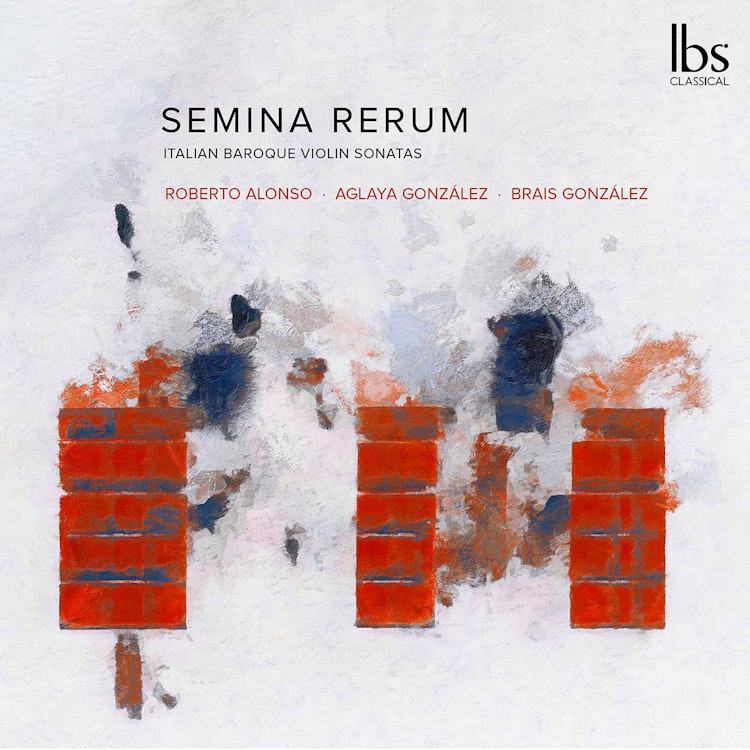
The album title, "Semina Rerum," translates to "seeds of things," suggesting a focus on foundational or originating elements within Italian Baroque violin sonatas.
Compositional Technique
A unifying element of this recording is the exploration of the D minor key, along with D major and A major, which are idiomatic tonalities that enhance the violin's natural resonance.
Composition History
The sonata for accompanied violin, named after the Italian 'suonare' (to make sounds with instruments), was a privileged genre for developing the violin's unique musical language.
You might also enjoy...
Vivaldi: Opera II - Sonate 1/6 per violino e basso continuo
Hasse: Sei concerti per organo solo
Mozart: Complete Marches
Strauss For Ever
Corrette : Six concertos pour orgue, Op. 26
De Machaut: Messe de Nostre Dame
Bach: Concerto for Flute, Violin and Keyboard, BWV 1044, Violin Concerto in D Minor, BWV 1052R & Brandenburg Concerto No. 5, BWV 1050
Al Combate: Rediscovered Galant Music from Eighteenth-Century Mexico
Christmas Vocal Music - Reichardt, J.F. / Bach, J.S. / Neuner, K. / Adam, A. / Gumpelzhaimer, A. / Brahms, J. / Handel, G.F.