Haydn's "The Seven Last Words" is described as an avant-garde work for its time, exploring the interface between suffering and passion in a way that would only later be seen in the music of Gustav Mahler.
Composition History
While Haydn himself prepared the string quartet version of "The Seven Last Words," the piano arrangement was made by an unknown composer, though Haydn approved of it.
Composition History
Joseph Haydn's "The Seven Last Words of Our Saviour on the Cross" was originally commissioned in 1786 by a canon named José Saluz de Santamaria in Cádiz, Spain.
Compositional Technique
Haydn described his orchestral version of "The Seven Last Words" as a "brand new work" consisting of purely instrumental music divided into seven sonatas, an introduction, and a concluding "Terremoto" (Earthquake).
Interpretation
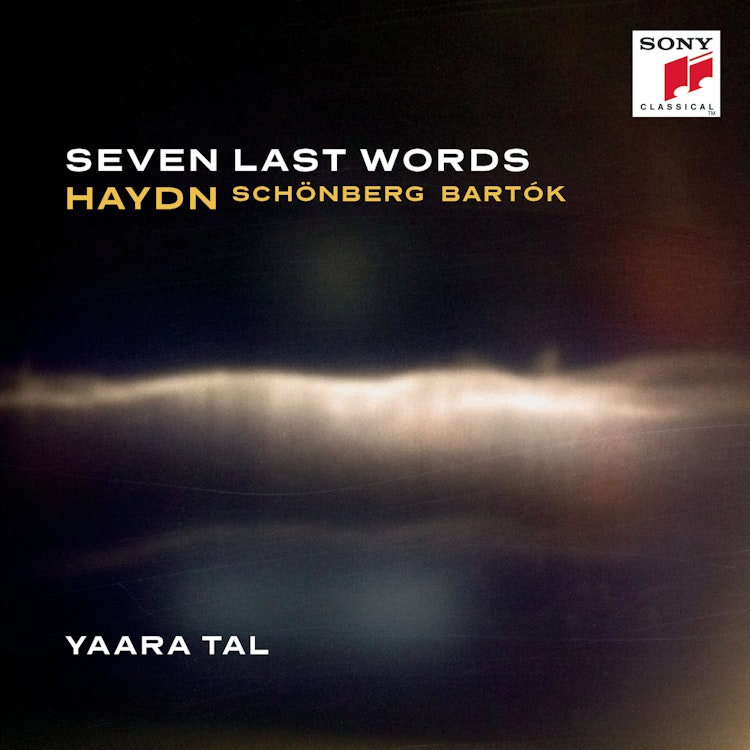
This album's performance concept fills the meditative spaces between Haydn's sonatas with movements from Arnold Schönberg's "Six Little Piano Pieces op. 19" and Béla Bartók's "Ten Easy Pieces for piano."
Composition History
Haydn's original orchestral version of "The Seven Last Words" was performed in a unique setting where the church was draped in black, and music filled intervals between a bishop's sermons on each of the seven words.
You might also enjoy...
Schubert, Prokofiev & Milhaud: Works for Piano
Kurtág: Játékok
Bartók, Janáček & Kurtág: Piano Works (A Concert in Paris)