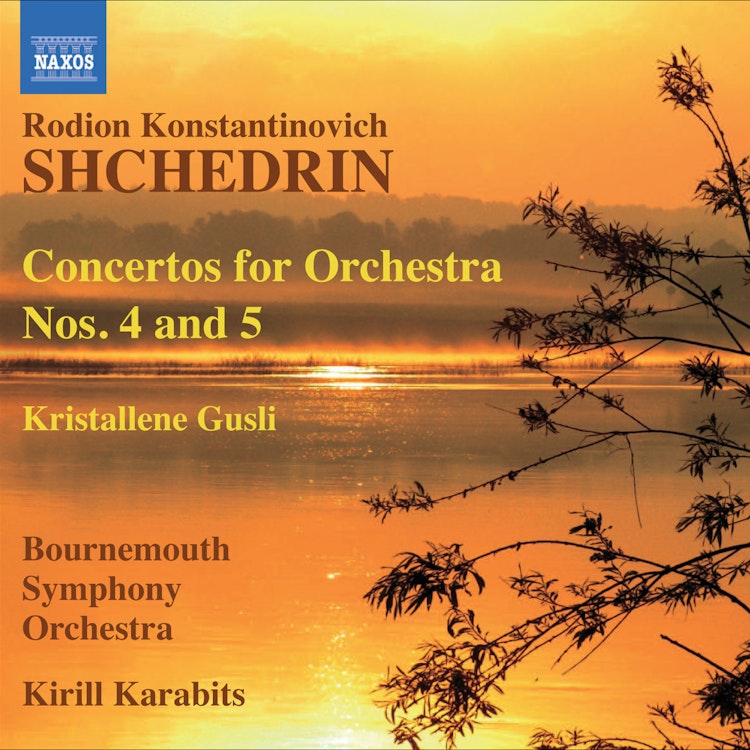
Shchedrin: Concertos for Orchestra Nos. 4 and 5 - Khrustal'niye gusli
10/27/2010, 3 Tracks, 58:30
Featuring
Kirill Karabits
Bournemouth Symphony Orchestra
Rodion Shchedrin
Did you know?
1/7
Composer Biography
Rodion Shchedrin succeeded Shostakovich as president of the Composers' Union of the Russian Federation, holding the position from 1973 to 1990.
Recording & Production
All three works on this album are world premiere recordings, meaning the performers had no prior reference material to consult.
Instruments
Kristallene Gusli (Crystal Psaltery) evokes the sound of the gusli, an ancient Russian psaltery or hand-held harp, but interpreted through a 20th-century composer's ears.
Composer's Artistic Vision
Rodion Shchedrin's childhood memories of the "extinct musical atmosphere of a Russian province" — including choral songs, accordion, balalaika, and shepherd cries — are a nostalgic echo in all three compositions on this album.
Interpretation
Conductor Kirill Karabits found inspiration for the Concerto for Orchestra No. 5 'Four Russian Songs' in the composer's idea of a troika, a Russian horse-drawn vehicle, moving through different landscapes.
Compositional Technique
The Concerto for Orchestra No. 4 'Khorovody' (Roundelays) uses an alto recorder to create a pastoral, open-air quality and flutes blowing into their mouthpieces for an eerie, whistling effect.
Composer Biography
Rodion Shchedrin, the composer, was married to Maya Plisetskaya, a prima ballerina of the Bolshoi Ballet, and established his name with the ballet 'Carmen Suite' in 1967.
You might also enjoy...
Walter Piston: Concerto for Orchestra
Bartók & Lutosławski: Concertos for Orchestra
Holmboe: Concertos Nos. 8 & 10 / Concerto Giocondo E Severo / The Ill-Tempered Turk