The original Budapest Quartet was founded in 1916 by Dutch cellist Harry Son, who came to Budapest to study with David Popper, along with three local musicians.
Performer Biography
The Budapest Quartet, as heard on this album, was originally formed by three Hungarians and a Dutchman, but by the time the Grieg was recorded, it was a Russian group.
Performer Biography
After 1939, the Budapest Quartet based itself in the United States as the resident ensemble at the Library of Congress, which granted them the use of a quartet of Stradivarius instruments.
Interpretation
The 'Russian style' of string playing, as exemplified by the Budapest Quartet on this recording, has been described as having won the 'war of the strings worldwide'.
Recording & Production
Fred Gaisberg of HMV signed the Budapest Quartet for electric recordings to compete with the Léner Quartet on the rival Columbia label, initially placing them on the less expensive black label.
Performer Biography
The Budapest Quartet experienced internal conflict when the two Russian members, Josef Roisman and Mischa Schneider, disliked the Hungarian members' Hubay-derived techniques, particularly their use of the bow point in staccato passages.
Performer Biography
The Budapest Quartet made its London debut in 1925, earning acclaim for its performances of Bartók, Smetana, and Beethoven.
You might also enjoy...
Bartók & Stravinsky: Chamber Music
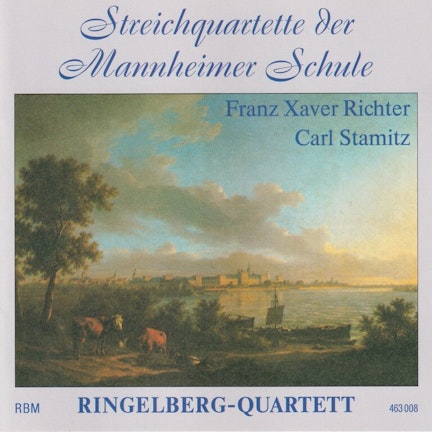
String Quartets of the Mannheim School
memento
Janacek: String Quartets Nos. 1 & 2
Haydn, Schumann, Brahms & Smetana: Chamber Works
Verdi: String Quartet in E Minor - Tchaikovsky: String Quartet No. 1 - Puccini: Crisantemi
Lopez-Graça: Complete Music for String Quartet and Piano, Vol. 1
Shostakovich: String Quartets Vol. 1
Nui
Mozart, Schumann & Others: Works for String Quartet