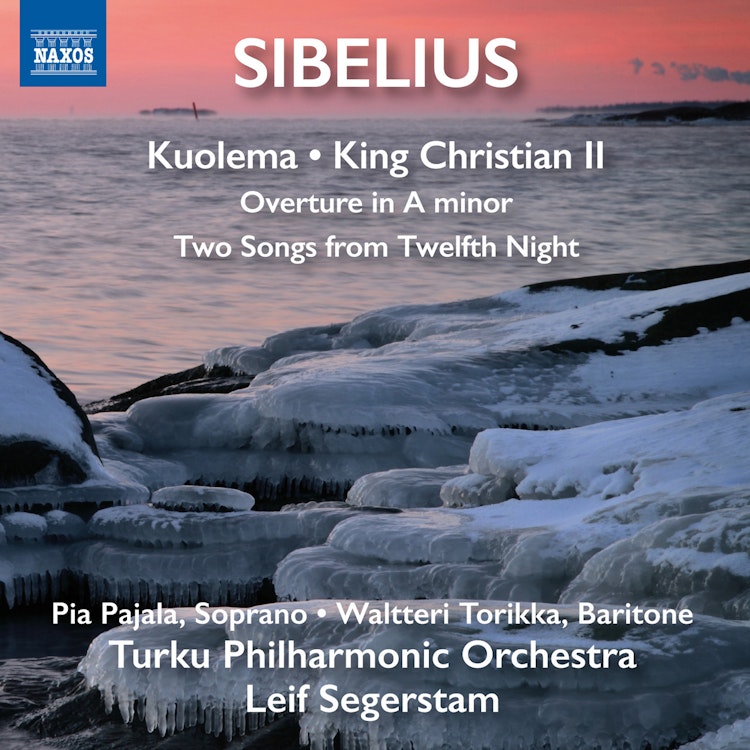
Sibelius: Kuolema, JS 113 & King Christian II, Op. 27
12/2/2015, 16 Tracks, 1:11:15
Featuring
Leif Segerstam
Waltteri Torikka
Pia Pajala
Turku Philharmonic Orchestra
Jean Sibelius
Did you know?
1/7
Composer Biography
Jean Sibelius is considered the most significant figure in the formation of national identity in Finnish music, with Finland celebrating a Flag Day on his birthday.
Composition History
The Overture in A minor, JS144, was composed for a concert in March 1902 at which Sibelius's Second Symphony received its premiere.
Composer Biography
After composing Tapiola in 1926, Sibelius produced no large-scale works for his remaining thirty-one years, a period often called the 'Silence from Järvenpää'.
Compositional Technique
Sibelius's incidental music for King Christian II includes a playful Musette movement intended to be danced by the character Dyveke, accompanied by street musicians.
Composition History
The music for Kuolema, JS113, was composed in 1903 to accompany a play written by Arvid Järnefelt, Sibelius's brother-in-law.
Recording & Production
The version of Kom nu hit, Död! heard on this recording is Sibelius's 1957 transcription for strings and harp, made in the year of his death.
Cultural Impact
Sibelius's arrangement of the first movement of Kuolema as Valse triste became widely popular, performed by salon and hotel bands across Europe.
You might also enjoy...
Mendelssohn & Schubert: Incidental Music
Shostakovich: The Bedbug, Incidental Music, Op. 19
Sibelius: Scaramouche, Op. 71
Glazunov: Tsar Iudeyskiy (The King of the Jews), Op. 95
Coleridge-Taylor: Othello, Op. 79: IV. The Willow Song
Grieg: Peer Gynt, Op. 23
Kraus, J.: Amphitryon
Tchaikovsky: The Snow Maiden Snegurochka
Mendelssohn: Ein Sommernachtstraum
Sibelius: Scaramouche, Op. 71 / Wedding March
Mendelssohn: A Midsummer Night's Dream by George Szell