Jorma Hynninen, the baritone, won the major Finnish singing competition in 1969 and the corresponding Scandinavian one two years later.
Performer Biography
Marianne Häggander, the soprano on this recording, studied at the Gothenburg Opera School and with Ingvar Wixell, and has won acclaim far beyond Sweden's borders.
Composer's Artistic Vision
In Luonnotar, Sibelius was no longer inspired by tragic Kalevala heroes like Kullervo or Lemminkäinen, but rather by the creation of the skies.
Composition History
Sibelius's Serenade, a large-scaled song for baritone and orchestra, remained unprinted and without an opus number, though he considered revising it.
Composition History
Luonnotar, a tone poem for soprano and orchestra, was composed in 1913 using text from the Kalevala, the Finnish national epic.
Compositional Technique
The Song of the Cross-Spider, from Sibelius's incidental music to Adolf Paul's play King Christian II, uses monotonous melodic features to express a dark, suggestive power.
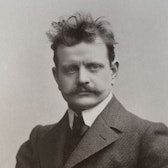
Composer Biography
Sibelius was a pantheist, meaning he sensed the presence of God throughout the universe, similar to Swedish poet Viktor Rydberg.
You might also enjoy...
Liszt: Orchestral Songs
Hans Sommer: Orchestral Songs
Marton, Eva: Liecder by Zemlinsky, Schoenberg, Schreker and Korngold
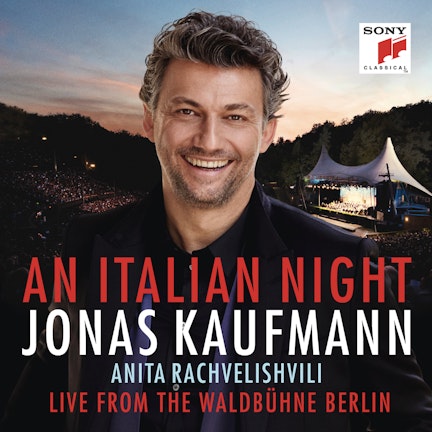
An Italian Night - Live from the Waldbühne Berlin
On Wings of Song
Frederica von Stade Sings Mahler Lieder
José Carreras - Granada
Urlicht - Mahler & Wagner: Orchesterlieder
Mahler, G.: Lieder Eines Fahrenden Gesellen / Kindertotenlieder / Des Knaben Wunderhorn (Excerpts)
Mahler, G.: Song of a Wayfarer / Kindertotenlieder / Des Knaben Wunderhorn