Sibelius likened the structural foundations of his Seventh Symphony to the formation of a river bed, where the flow of musical ideas determines the shape, free from convention.
Performer Biography
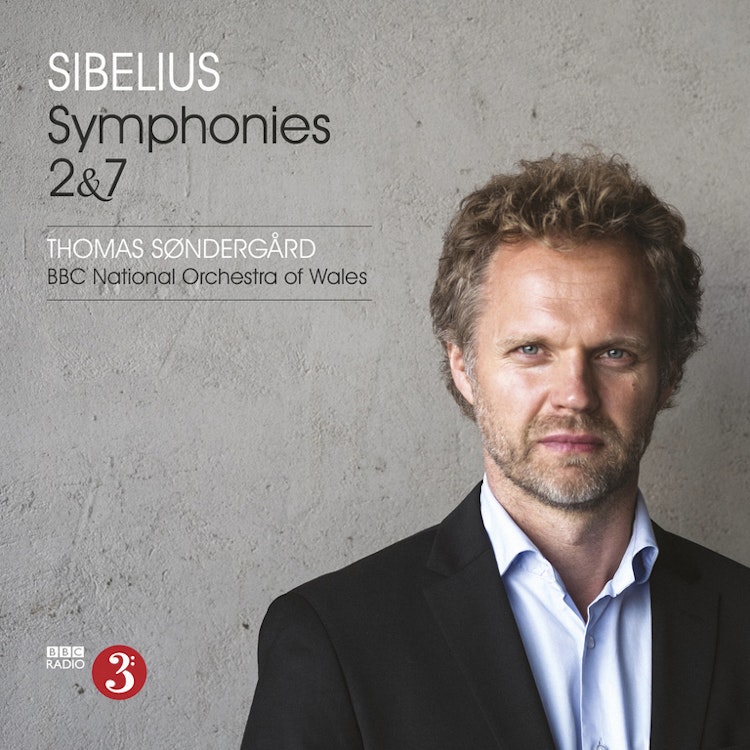
Thomas Søndergård, the conductor on this album, is the Principal Conductor of the BBC National Orchestra of Wales and Principal Guest Conductor of the Royal Scottish National Orchestra.
Composer's Artistic Vision
Sibelius denied any political or patriotic links in his symphonies, stating that his music was purely a musical expression without a literary basis, beginning where words end.
Historical Context
Sibelius's Second Symphony was premiered in 1902 while Finland was under Russian rule, leading many critics to interpret it as having a strong nationalistic message.
Compositional Technique
Sibelius's Seventh Symphony, originally titled Fantasia sinfonica, explores a broadened concept of the symphony, aiming for organic growth and seamless tempo relations rather than traditional movements.
Composition History
Baron Axel Carpelan, an influential patron of the arts, funded Sibelius's trip to Italy in 1900, where the seeds for his Second Symphony were sown.
Composer Biography
Jean Sibelius, the composer, was experiencing personal difficulties, including marriage and money worries, frequent alcoholic binges, and the death of his 15-month-old daughter Kirsti, around the turn of the 20th century.
You might also enjoy...
Sibelius: Symphonies Nos. 2 & 7
Sibelius: Kullervo, Op. 7
Sibelius: Symphony No. 3, Op. 52
Sibelius: Symphonies Nos. 4 and 5
Sibelius: Kullervo
Sibelius: Kullervo, Op. 7
Sibelius: Symphony No. 2 in D Major, Op. 43, Symphony No. 4 in A Minor, Op. 63
Sibelius: Symphony No. 5, Op 82
Sibelius: Symphony No. 3 in C Major, Op. 52: II. Andantino con moto, quasi allegretto
Sibelius: Symphony No. 5
Sibelius: Symphonies Nos. 4 & 5
Jean Sebelius: Symphonies Nos. 4 and 5 (Berlin Symphony, K. Sanderling)