Sibelius himself gave conflicting instructions regarding the bells in his Fourth Symphony, telling producer Walter Legge he wanted 'something larger than a glockenspiel' in 1937, but telling Ormandy in 1955 he 'always wanted tubular bells'.
Interpretation
In Sibelius's Fourth Symphony, Stokowski chose to replace tubular bells with a smaller glockenspiel in piano passages, reserving the louder chimes for fortissimo sections.
Recording & Production
The recording of Sibelius's Fourth Symphony in 1932 was the first of Sibelius's symphonies to be put onto disc in America and was a 'World Première Recording'.
Recording & Production
During the Great Depression, Stokowski's recordings, including Sibelius's Fourth Symphony, used a reduced orchestra, with engineers compensating by placing microphones closer to instruments.
Performer Biography
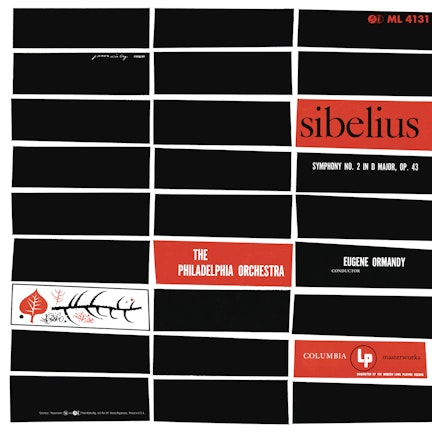
Eugene Ormandy and Leopold Stokowski, the conductors on this album, were considered the foremost champions of Sibelius's music among foreign-born conductors in America during the 78 rpm and LP eras.
Performer Biography
Eugene Ormandy, the other conductor, had a long tenure with the Philadelphia Orchestra, following Stokowski, and was an equally strong advocate for Sibelius's music.
Performer Biography
Leopold Stokowski, one of the conductors, had a career spanning six decades and was still conducting Sibelius at the age of 94.
You might also enjoy...
Sibelius: Symphony No. 2; No. 3
Sibelius: Orchestral Works
Sibelius: Symphony No. 2 in D Major, Op. 43, Pohjola's Daughter, The Swan of Tuonela & Finlandia