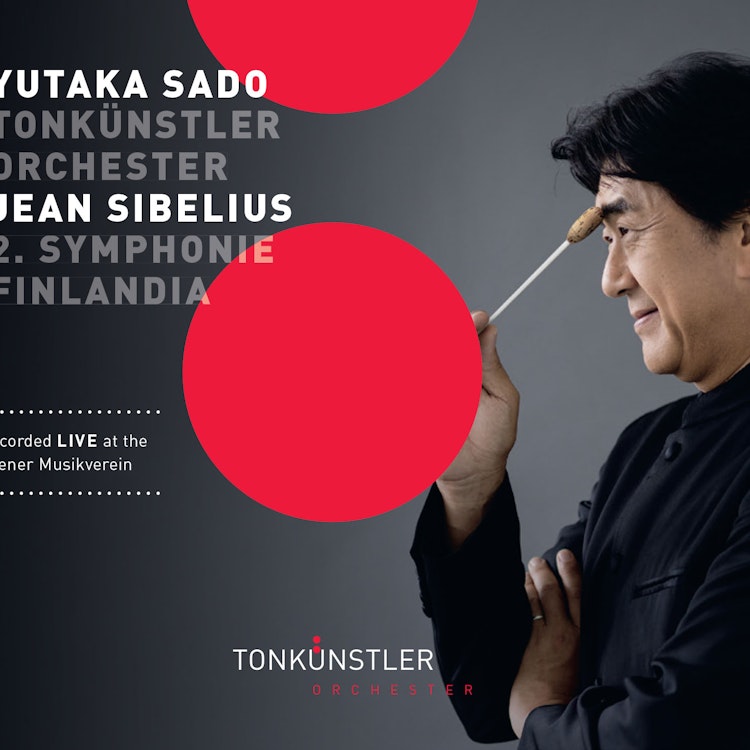
Yutaka Sado, the conductor, was a long-time assistant to both Leonard Bernstein and Seiji Ozawa, and won major conducting prizes in Besançon and Jerusalem.
Cultural Impact
Sibelius's 'Athenians' Song', composed in early 1899, quickly became a musical symbol of resistance against the Tsar in Finland.
Composition History
Sibelius gathered ideas and motifs for his Second Symphony during a stay in Rapallo, Italy, in the winter and spring of 1901.
Composition History
The creation of 'Finlandia' coincided with a period of intense Russification in Finland under Governor-General Nikolai Bobrikov, who aimed to suppress separatist movements.
Recording & Production
The Second Symphony on this album was recorded live at the Wiener Musikverein in October 2016, while 'Finlandia' was recorded at Auditorium Grafenegg in October 2016.
Composer's Artistic Vision
Jean Sibelius, a Finnish composer, saw himself as an international 'player' in music, not aiming to invent a 'Finnish sound' or incorporate folklore into his work.
Historical Context
Sibelius's tone poem 'Finlandia' is considered a powerful cry for independence, reflecting Finland's centuries-long struggle between Swedish and Tsarist Russian rule.
You might also enjoy...
Sibelius: Symphony No. 2 in D Major, Op. 43 & Finlandia, Op. 26
STEREORMANDY, Vol. VIII
Sibelius: Symphony No. 2 & Finlandia
Sibelius: Symphony No. 1 in E Minor, Op. 39 & Finlandia, Op. 26