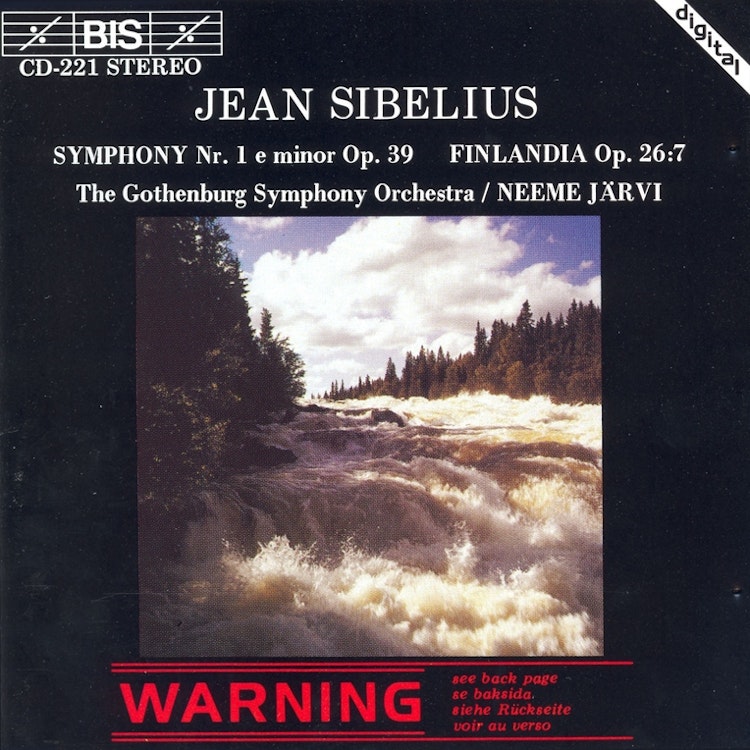
Sibelius: Symphony No. 1 in E Minor, Op. 39 & Finlandia, Op. 26
9/1/2013, 5 Tracks, 47:54
Featuring
Neeme Järvi
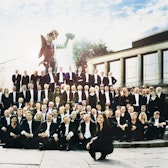
Göteborgs Symfoniker
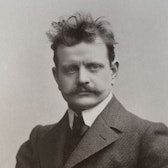
Jean Sibelius
Did you know?
1/7
Performer Biography
Neeme Järvi, the conductor, was born in Estonia in 1937 and received his main conducting training under Rabinovich and Mravinski at the Leningrad Conservatoire.
Composer's Artistic Vision
Sibelius believed a composer should be able to "emancipate himself from the parochial," and he achieved this in Finlandia, allowing its ethos to apply universally.
Composition History
Sibelius's tone poem, Finlandia, originated in November 1899 as part of Finland's struggle for freedom of speech and autonomy against the Tsarist regime.
Compositional Technique
The structure of Finlandia presents parallels with Beethoven's Egmont Overture, featuring a sombre introduction, a tragically accented main theme, a struggling secondary theme, and a coda.
Performer Biography
The Gothenburg Symphony Orchestra, one of Scandinavia's oldest, was founded in 1905 and has hosted guest appearances by renowned conductors like Bruno Walter, Wilhelm Furtwängler, and Herbert von Karajan.
Historical Context
The creation of Finlandia was linked to a protest action, disguised as a charity gala, held at the Swedish theatre in Helsinki, featuring a series of tableaux depicting Finnish history with music by Sibelius.
Recording & Production
This recording was made in the Gothenburg Concert Hall, which is considered one of the world's finest concert venues, a quality confirmed by a scientific study and interviews with 23 internationally famous conductors.