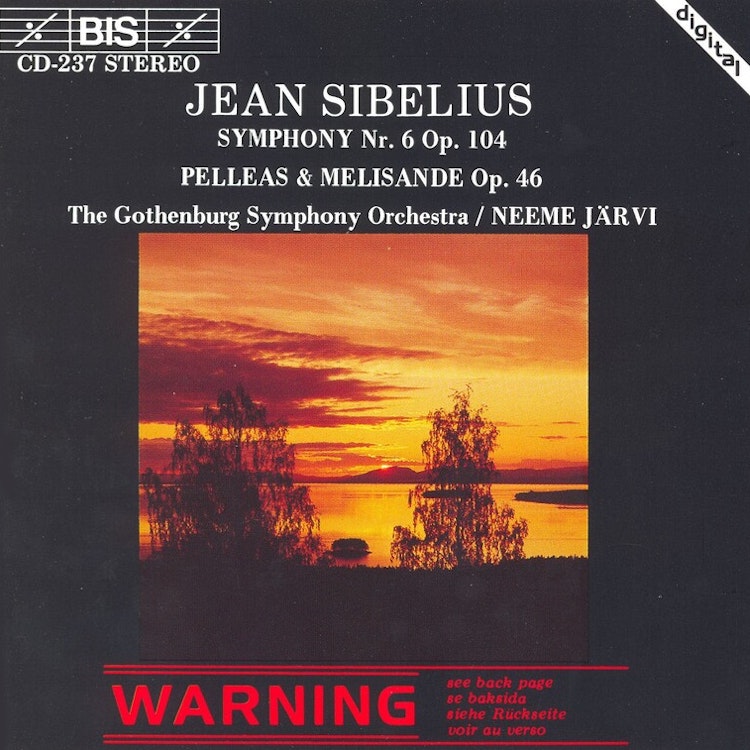
Sibelius: Symphony No. 6 / Pelleas & Melisande Suite
1/31/1985, 13 Tracks, 56:46
Featuring
Neeme Järvi
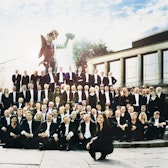
Göteborgs Symfoniker
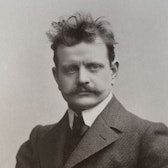
Jean Sibelius
Did you know?
1/7
Instruments
In the Sixth Symphony, Sibelius uses brass more sparingly than in his other symphonies, and the harp reappears, treated with archaic simplicity like the Finnish five-stringed kantele.
Compositional Technique
In his Sixth Symphony, Sibelius achieved a synthesis between church modes and the major-minor key system, feeling uniquely suited to this due to his "birth and uninterrupted habit."
Performer Biography
Neeme Järvi, born in Estonia in 1937, received his conducting education in Leningrad and was chief conductor for the Estonian Radio and Television Symphony Orchestra and the Tallinn Opera from 1963-1980.
Recording & Production
This album was recorded in Gothenburg Concert Hall, which is scientifically proven to be one of the world's best concert venues, confirmed by acoustic studies and interviews with 23 internationally renowned conductors.
Composer Biography
During World War I, while drafting the Sixth Symphony, Sibelius composed many pieces for violin and piano, and even proposed a new violin concerto to his publisher for 5,000 Reichsmark.
Composition History
Sibelius conceived the basic idea for his Sixth Symphony in autumn 1914, at the same time as his Fifth Symphony, with thematic worlds often interweaving between the two.
Composer's Artistic Vision
Sibelius believed that a "marvellous logic" or "God" commands a work of art, making the composer merely a tool in the creative process.
You might also enjoy...
Sibelius: Symphony No. 1, Op. 39 & Suite from Pelléas et Mélisande, Op. 46
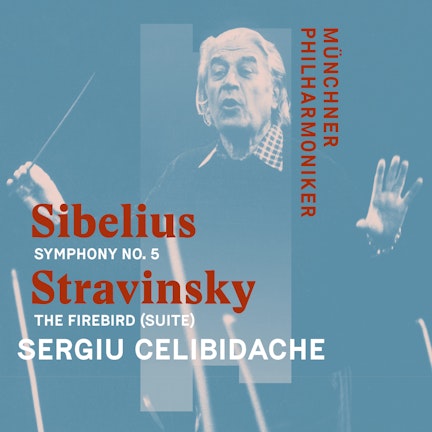
Sibelius: Symphony No. 5 in E-Flat Major Op. 82 & Stravinsky: The Firebird (Suite) [Live]