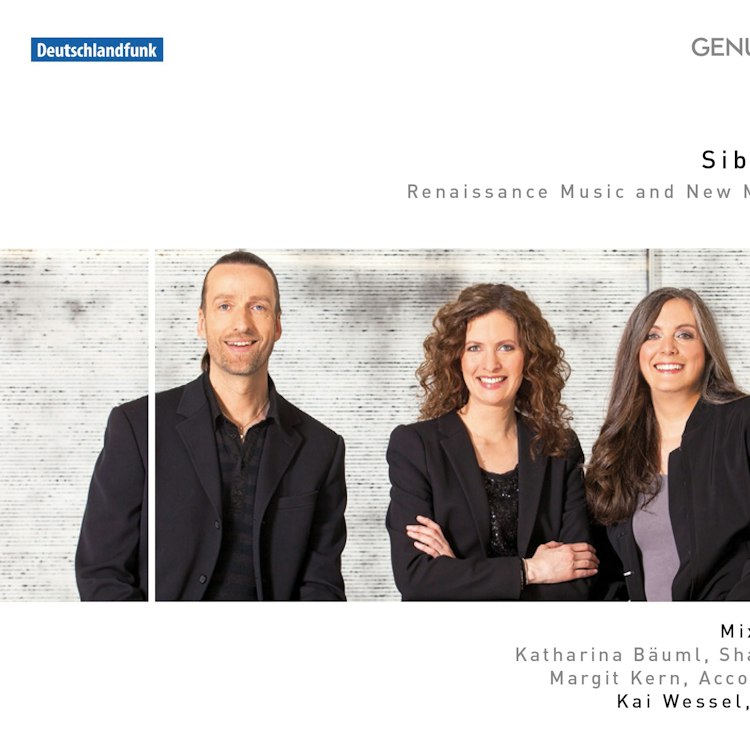
The ensemble Mixtura, featuring Katharina Bäuml on shawms and Margit Kern on accordion, combines instruments from widely separated eras to explore new sound constellations.
Composition History
Orlando di Lasso's Prophetiae Sibyllarum was likely composed around 1560, inspired by Roman paintings of Sibyls, though it was not published until 1600, six years after his death.
Album & Artwork
The album title, 'Sibylla', refers to the Sibyls, ancient oracles who were believed to be in contact with the 'great beyond' and whose prophecies were later interpreted as Christian.
Instruments
The shawm, a 14th-century reed instrument, and the accordion are featured, both chosen because their tonal worlds were not shaped by orchestral needs.
Historical Context
The Sibyls, pagan prophetesses, were incorporated into Christian tradition in the 15th century, with two more added to the ten ancient ones to match the twelve biblical prophets.
Compositional Technique
Lasso's Prophetiae Sibyllarum uses radical chromatic writing, with all twelve notes of the octave appearing in the first nine bars, and features clashing harmonies and sudden key changes.
Composer's Artistic Vision
Lasso's radical chromaticism in Prophetiae Sibyllarum aimed to musically represent the 'erratic, aimless' nature of the Sibylline prophecies and connect them to their pagan origins.
You might also enjoy...
Lux Feminæ 900-1600
Early & Late
Milano Musica Festival Live, Vol. 2
Kummer: Chamber Music for Winds
Loeb: Yearning of Autumn - Chamber Music from Japan
Rare Italian Clarinet Chamber Music of the 19th Century
Copland: Works
American Breeze
Und das Lied bleibt schön
Dutch Masters
Manuel Balboa: Obra completa para conjunto instrumental