During the 'Golden Age' of Tango, orquestas típicas, often large ensembles with multiple bandoneons, violins, piano, and double bass, developed unique styles ranging from streamlined to complex and ornate.
Cultural Impact
After World War I, Tango dancers from Buenos Aires introduced the art form to Europe, where a modified version with less body contact, called Standard Tango, led to a 'tango fever' in cities like Paris, London, and Berlin.
Historical Context
The Tango emerged from a blend of influences including the Cuban habanera, Polish mazurka, Bohemian polka, and Brazilian maxixe, with the German bandoneon contributing to its unique sound.
Interpretation
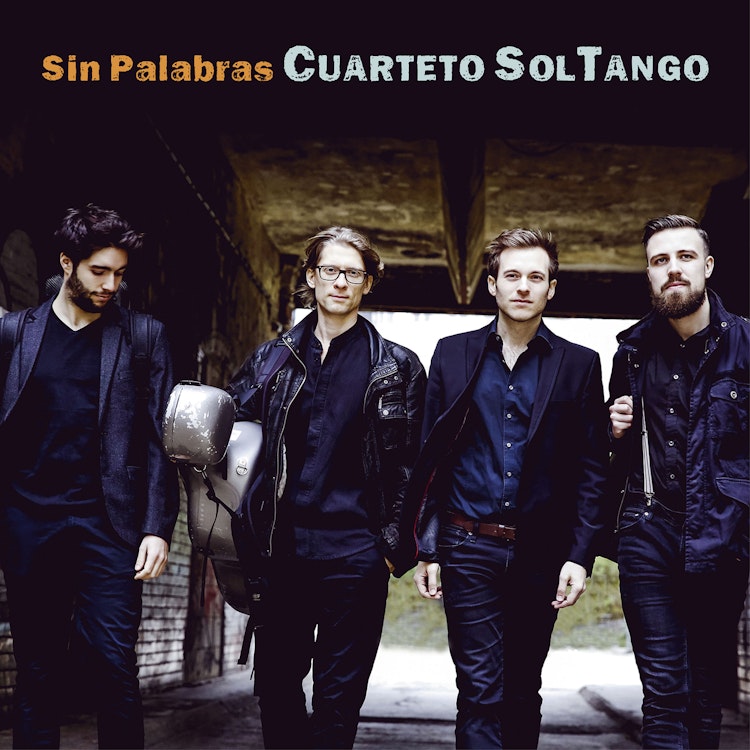
This album is structured like a traditional milonga, with blocks of three songs (tandas) in the style of famous Golden Age band leaders, separated by short, different-genre pieces called cortinas.
Album & Artwork
The album's title, "Sin Palabras," meaning 'without words,' reflects Cuarteto SolTango's focus on instrumental arrangements where the melodic line is shared among all instruments.
Historical Context
The Argentine Tango was born in Buenos Aires around 1880, a city whose population grew tenfold in 50 years due to European immigration.
Performer Biography
Cuarteto SolTango's bandoneon player, Norwegian Andreas Rokseth, graduated as the best bandoneonist in the history of Codarts University Rotterdam and has impressed Argentine audiences.