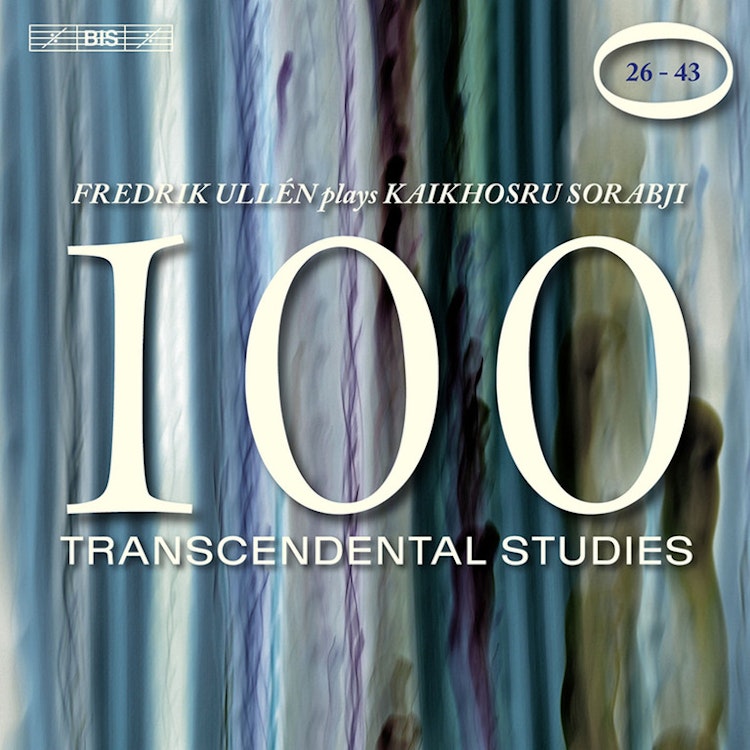
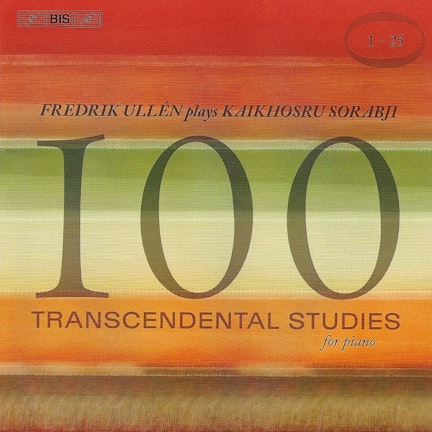
Sorabji's 100 Transcendental Studies, composed between 1940 and 1944, is his second-longest work, lasting at least seven hours, and is the largest collection of concert études in the known repertoire.
Compositional Technique
Sorabji's 100 Transcendental Studies allude to Liszt's famous set, and while influenced by Scriabin, Busoni, and Godowsky, Sorabji surpasses them in textural and rhythmic complexity.
Composer's Artistic Vision
Sorabji, who also wrote extensive music criticism, was an early reviewer of phonographs and records, stating that technology brought him closer to not attending concerts.
Performer Biography
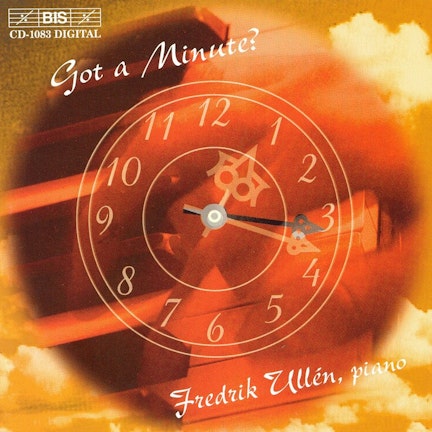
Fredrik Ullén, the pianist on this recording, is also a neuroscientist who leads a research group at Karolinska Institutet in Stockholm studying the effects of musical training on the human brain.
Composer Biography
Kaikhosru Sorabji, born in England in 1892 to a Parsi businessman father and Spanish-Sicilian opera singer mother, strongly rejected being identified as English or Indian.
Compositional Technique
While many of Sorabji's Transcendental Studies are traditional études focusing on a single technical idea, later pieces in the cycle are much larger, including extended nocturnes, a huge waltz, and a passacaglia with 100 variations.
Composer Biography
Sorabji was largely self-taught as a composer and wrote approximately 11,000 pages of music between 1914 and 1982, mostly for piano and much of it unpublished.
You might also enjoy...
Scelsi: Tre pezzi for Trombone Solo
Berlioz: Symphonie fantastique
Shostakovich: Symphony No. 4 (Arr. for 2 Pianos)
Orff: Carmina Burana
Strauss: Symphony No. 2 (Version for Piano 4 Hands) - Albert: Waltzes for Piano 4 Hands