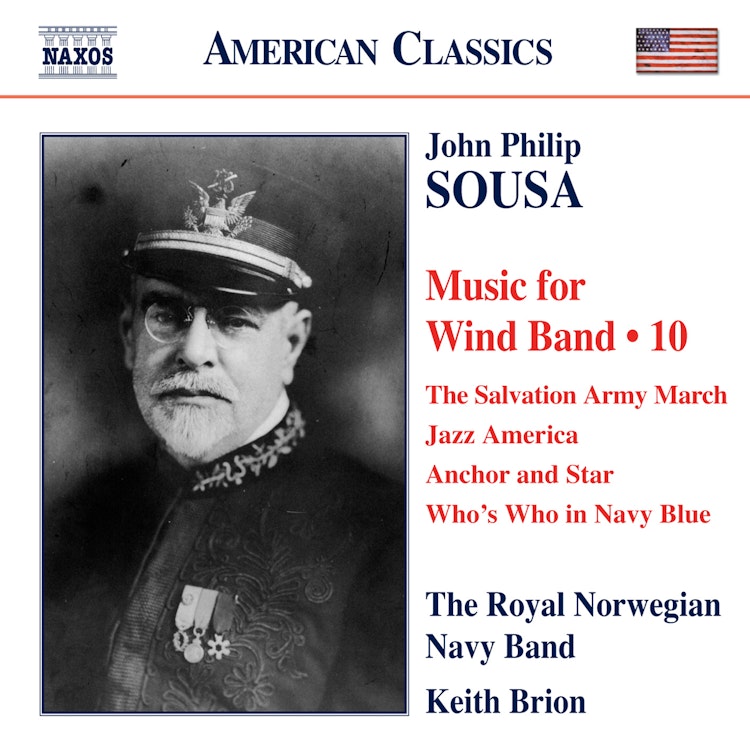
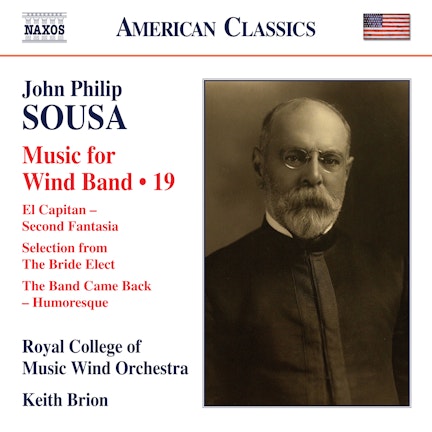
John Philip Sousa standardized the march form as it is known today, but he was also an inventive composer of over 200 works, including symphonic poems, suites, operas, and operettas.
Historical Context
The Sousa Band's unprecedented popularity occurred when few American orchestras existed, making band concerts the most important aspect of U.S. musical life from the Civil War to about 1920.
Composer's Artistic Vision
Sousa's principles of instrumentation and tonal color influenced many classical composers, and his patriotic operettas helped introduce a truly native musical attitude in American theater.
Interpretation
Keith Brion, the conductor on this album, leads his own New Sousa Band and is a specialist in Sousa's period style, publishing numerous performing editions of his music.
Performer Biography
The Royal Norwegian Navy Band, one of Norway's most acclaimed wind ensembles, was founded in 1820 and was awarded the Spellemannsprisen, the Norwegian equivalent to the GRAMMY® award, in 2003.
Composer Biography
John Philip Sousa, known as 'The March King', became conductor of the U.S. Marine Band at the age of 26 in 1880, quickly earning renown for his compositions.