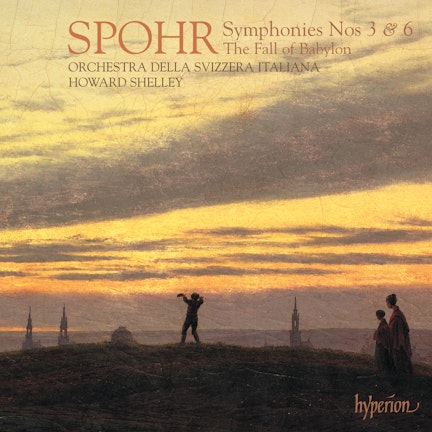
Spohr's Symphony No. 4, 'Die Weihe der Töne' ('The Consecration of Sounds'), was inspired by a poem by his late friend Carl Pfeiffer and is programmatic, with movements based on the poem's verses.
Critical Reception
Until Mendelssohn and Schumann emerged, Spohr's symphonies were regularly performed alongside those of Haydn, Mozart, and Beethoven in the international repertoire.
Composer Biography
At 21, Spohr became the youngest Music Director in Germany at the court of Gotha.
Composer Biography
Louis Spohr was a significant figure in German music in the early 19th century, excelling as a composer, violinist, conductor, teacher, and organizer.
Compositional Technique
The finale of Spohr's Symphony No. 4 is a slow movement, which was an 'infrequently used form' at the time and influenced later composers like Tchaikovsky and Mahler.
Composer Biography
Spohr became famous overnight as a 20-year-old violin virtuoso after a concert in Leipzig on December 10, 1804.
Composition History
The cantata 'Das befreite Deutschland' ('Germany liberated') was composed in Vienna after Napoleon's defeat at Leipzig, but its planned premiere at the Congress of Vienna was thwarted.