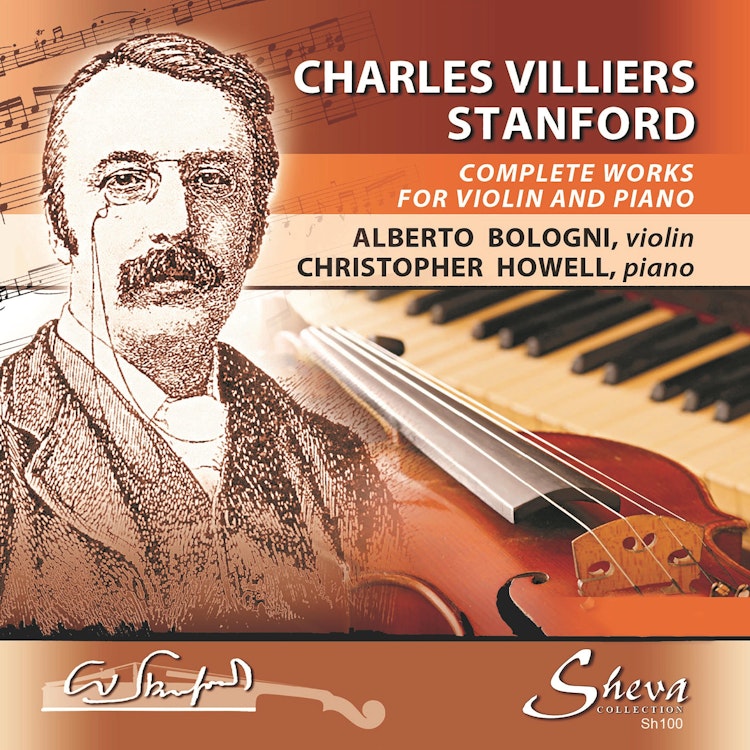
Stanford's Second Violin Sonata was presumed lost for a long time, remaining unpublished and unperformed until a copyist's score was discovered in the Royal College of Music Library.
Composer Biography
Sir Charles Villiers Stanford, the composer, learned violin from Mr. R.M. Levey, who was the stage name of Richard Michael Levey, an Irishman who led the orchestra of Dublin's Theatre Royal.
Performer Biography
Alberto Bologni, the violinist on this album, plays a Santo Serafino violin dated Venice 1734.
Composition History
Stanford's Three Intermezzi, originally for clarinet, were only published for violin and piano after the publisher Novello made it a condition for publication.
Compositional Technique
In the final 'Reel' of the Six Irish Fantasies, Stanford ingeniously has a jig and a reel running simultaneously in the middle section, despite their different characters.
Compositional Technique
The Second Violin Sonata by Stanford uses 'luscious' double stops for the violin at passionate moments, contrasting with the piano often playing in bare octaves, creating a unique effect.
Critical Reception
George Bernard Shaw, a famous playwright and critic, gave wholehearted approval to Stanford's Six Irish Fantasies, praising their 'excellent fiddling' and 'genuine Irish violinism'.
You might also enjoy...
Hubay: Works for Violin and Piano, Vol. 6
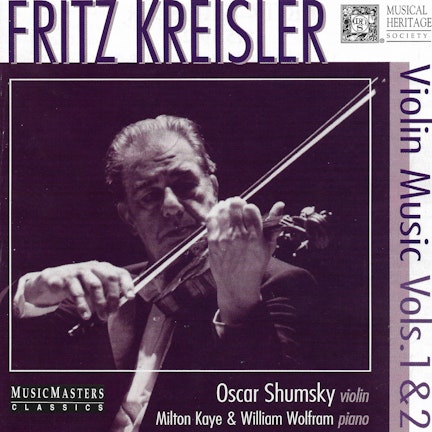
Kreisler: Violin Music, Volumes 1 & 2
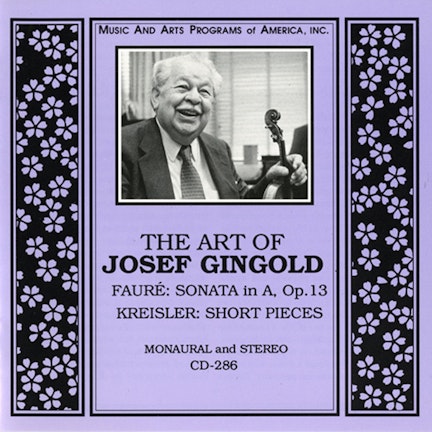
The Art of Josef Gingold
So French
Music by Turina, Rodrigo & Granados
Favourite Violin Pieces
Grieg, Tchaikovsky, Castelnuovo-Tedesco & Others: Violin & Piano Works