Perséphone premiered on April 30, 1934, with Ida Rubinstein in the title role and Stravinsky conducting, to mixed public reactions, and has only been performed sporadically since.
Composition History
The text for Perséphone is based on a pre-WWI reworking of the Homeric Hymn to Demeter by French writer and Nobel Prizewinner André Gide, which Ida Rubinstein desired as the work's foundation.
Composition History
Stravinsky's Perséphone was commissioned by Ida Rubinstein, a Russian dancer and member of Sergei Diaghilev's Ballets Russes, who also commissioned works from Debussy, Ravel, and Honegger.
Compositional Technique
The title role of Perséphone is a purely speaking role, which Ida Rubinstein also danced at the premiere, while the priest Eumolpus is assigned to a tenor.
Compositional Technique
The orchestral score of Perséphone is distinctly lyrical and often has a chamber-music character, with moments of incredible clarity and sharply reduced dynamics, contrasting with the brutal excesses of Stravinsky's earlier Rite of Spring.
Compositional Technique
Perséphone is a 'Melodrama with Dance' that uniquely mixes elements from different genres, including melodrama, song, chorus, dance, and pantomime.
Composer Biography
Stravinsky's collaboration with André Gide on Perséphone was strained, with Stravinsky prioritizing musical sound over the text's inherent meaning, deeply hurting Gide.
You might also enjoy...
Druckman: Lamia (Revised Version) (Recorded 1975)
Ye: "The Song of the Earth" for Soprano, Baritone and Orchestra, Op. 47: V. Feelings upon Awakening from Drunkenness on a Spring Day
Gavin Bryars: Winested
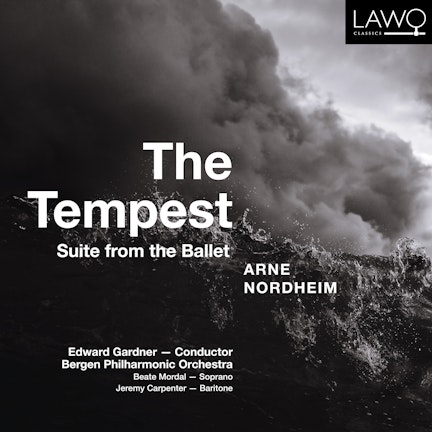
Arne Nordheim: The Tempest
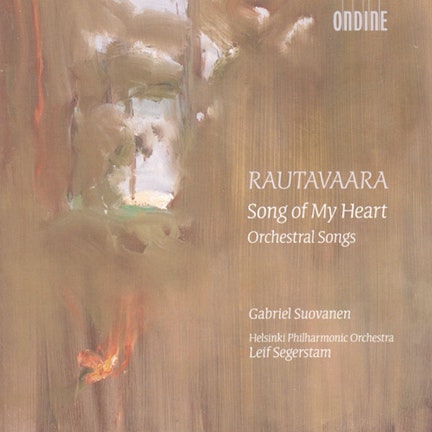
Rautavaara, E.: Sonnets of Shakespeare / 5 Sonette an Orpheus / Die Liebenden / God's Way / 3 Songs From the Opera Aleksis Kivi
Xiaogang Ye: Twilight in Tibet, 7 Episodes for Lin'an & Tianjin Suite
Shostakovich/Prokofiev: On Guard for Peace
Shostakovich/Prokofiev: On Guard for Peace
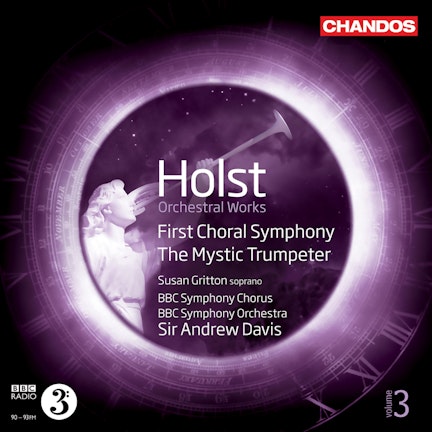
Holst: Orchestral Works, Vol. 3
Bryars: I Have Heard It Said That A Spirit Enters...
Duetti da camera
Hanspeter Kyburz: Malstrom, Voynich Cipher Manuscript & Parts
Birtwistle: Angel Fighter, In Broken Images & Virelai (Sus une fontayne)