Despite the Calvinist shift, Sweelinck, who remained Catholic his entire life, gained considerable fame through public concerts outside of liturgy, leading to significant salary increases.
Composition History
Sweelinck composed his keyboard music relatively late in his career, after 1605, and these works are seen as a summary of his improvisational and didactic activities.
Instruments
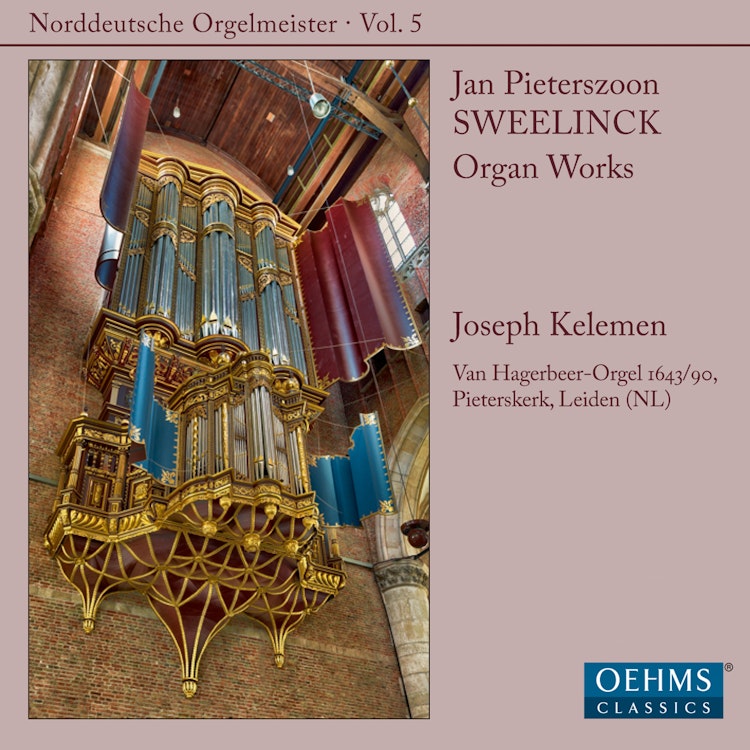
The Van Hagerbeer organ in the Pieterskerk, Leiden, used for this recording, is the largest Dutch instrument that still features meantone temperament, a tuning system common from 1550-1730.
Composer Biography
Jan Pieterszoon Sweelinck, the composer, began his career as an organist at the Oude Kerk in Amsterdam at the young age of 15.
Cultural Impact
Sweelinck was a renowned pedagogue, attracting numerous talented students from Germany, and was later called the 'Hamburg organist-maker' by Johann Mattheson in 1740.
Instruments
Some pipes in the Van Hagerbeer organ date back to 1448, making them among the oldest playable pipes in the world.
Historical Context
During Sweelinck's time, Amsterdam became Calvinistic, and organs, considered relics of Catholicism, were removed from churches, but many cities kept them and employed organists as city employees.
You might also enjoy...
Tunde: Organ Works
Tunder: Complete Organ Music
Hamburger Rhetorik
A Versatile Organ in Maryland
Gillian Weir - A Celebration, Vol. 12 - French Virtuoso Organ Music
Bach, J.S.: Weimar, Kothen and Leipzig (Organ Works)
Berg, Bengt: Faglarna Och Kallorna (The Birds and the Springs)
Solemnity & Joy
Buxtehude: Orgelwerke Vol. 6
Die Orgeln im Freiburger Münster - Langschifforgel - In Stylo Phantastico