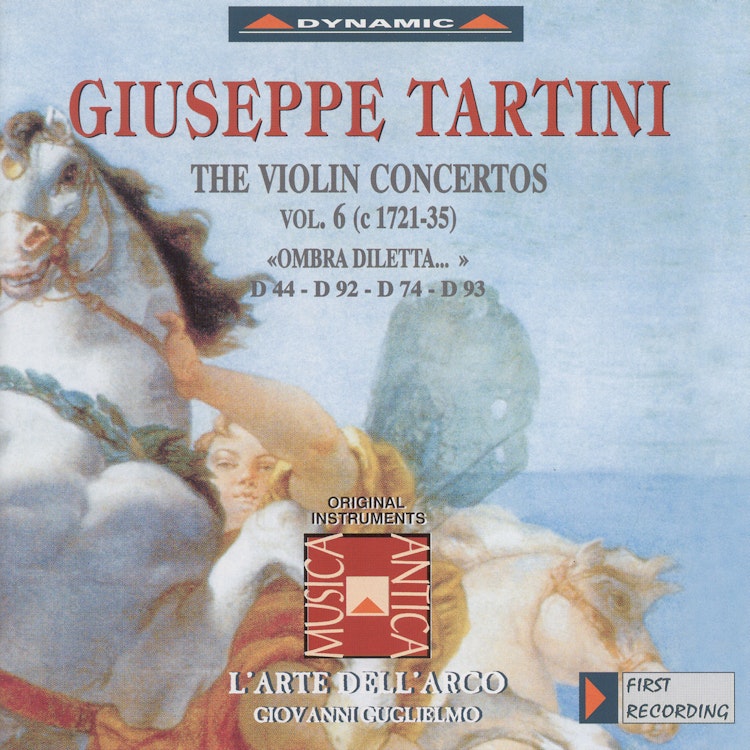
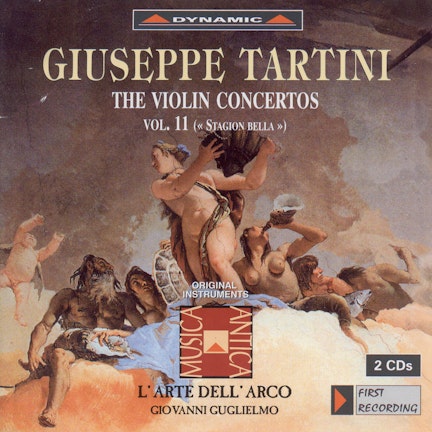
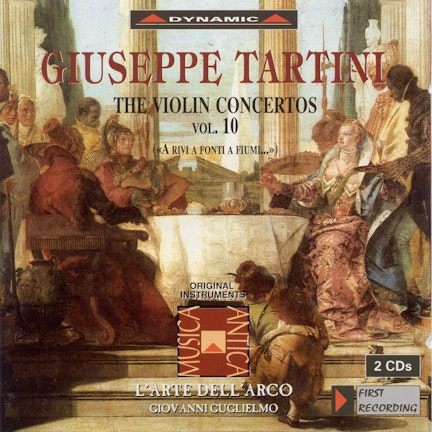
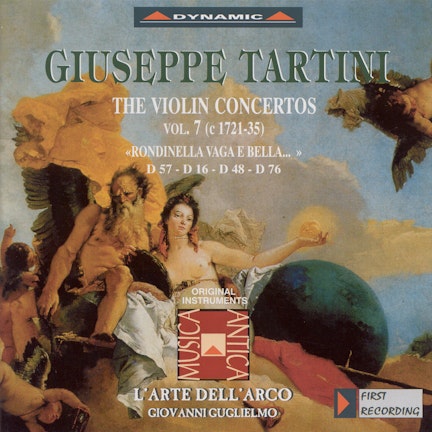
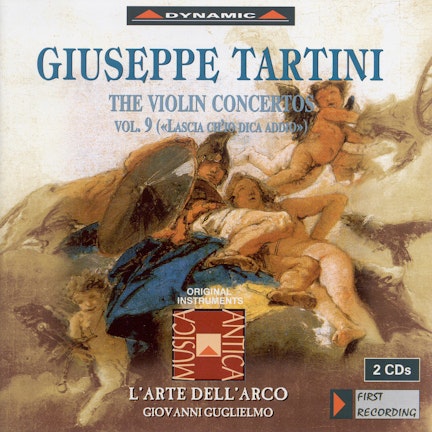
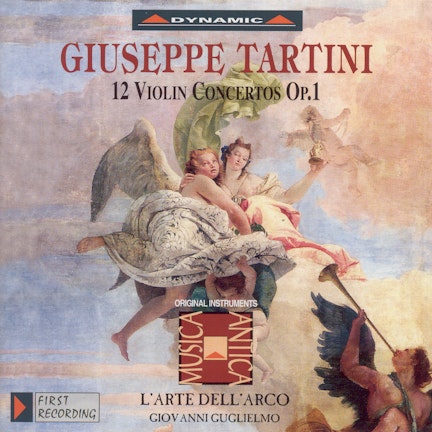
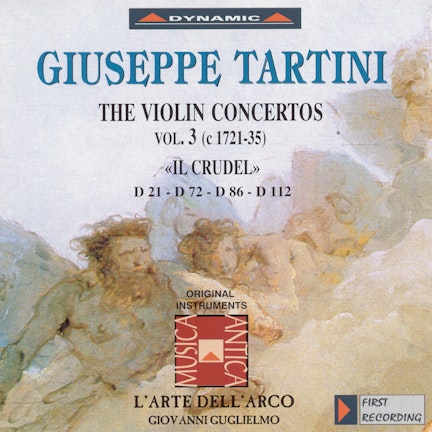
The ensemble L'Arte dell'Arco uses instruments that are either original Italian-made or modern copies, and plays at A=442 Hz, a pitch chosen to reflect the historical practice in Tartini's region.
Interpretation
The performers of L'Arte dell'Arco completed missing sections and movements in Tartini's concertos based on their deep knowledge of his musical language, ensuring adherence to his formal, harmonic, and structural patterns.
Compositional Technique
Tartini's 'second creative period,' starting around 1735, is characterized by highly virtuosic instrumental writing, freedom from Vivaldian influence, and an increased expressive search in slow movements, which became the core of his compositions.
Performer Biography
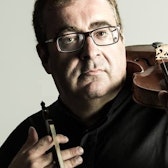
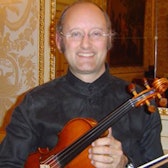
L'Arte dell'Arco, founded in 1994 by Giovanni and Federico Guglielmo, aims to present Italian music, particularly from the Venetian Republic, in a new light, engaging in research and re-evaluation of forgotten works.
Composition History
Most of Tartini's violin concertos exist only in manuscript form, as he, like many composers of his time, rarely dated his compositions, making chronological ordering difficult.
Composer Biography
Giuseppe Tartini, an 18th-century Italian composer, focused his entire musical output on the violin, his instrument of choice, composing 135 violin concertos and around 200 violin sonatas.
Recording & Production
The ensemble L'Arte dell'Arco undertook a complete recording project of Tartini's violin concertos, facing challenges due to the largely unpublished nature of his works and the difficulty in deciphering his dense, corrected manuscripts.
You might also enjoy...
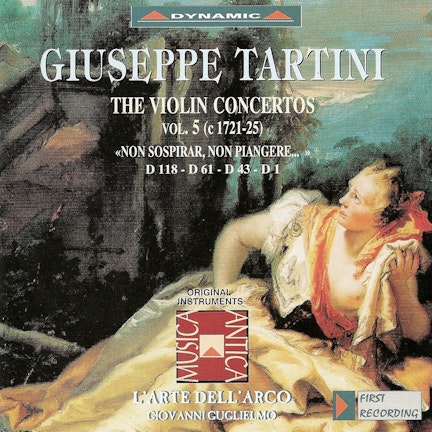
Tartini, G.: Violin Concertos, Vol. 5 (L'Arte Dell'Arco) - D. 1, 43, 61, 118, "Non Sospirar, Non Piangere…"