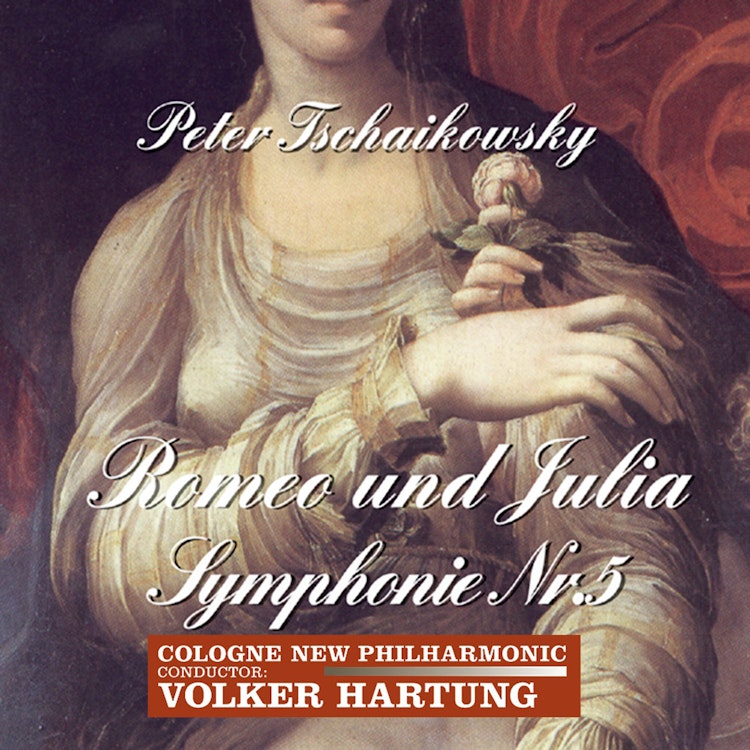
Tchaikovsky: Romeo and Juliet Fantasy Overture & Symphony No. 5 in E Minor
8/7/2015, 5 Tracks, 1:05:59
Featuring
Volker Hartung
Junge Philharmonie Köln
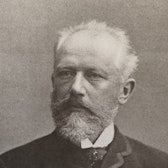
Pyotr Ilyich Tchaikovsky
Did you know?
1/7
Performer Biography
Volker Hartung, the conductor, studied viola at the Juilliard School of Music and the California Institute of the Arts, and conducting with Sergiu Celibidache.
Notable Performances
During the 1941 Siege of Leningrad, the Leningrad Philharmonic Orchestra performed Tchaikovsky's 5th Symphony, continuing to play even as bombs fell nearby, with the performance broadcast live to the UK.
Compositional Technique
Tchaikovsky's Romeo and Juliet, Fantasy Overture, despite its name, is musically a symphonic poem in sonata form, based on three aspects of the love story.
Composition History
Tchaikovsky's friend Balakirev, a talented composer, suggested he write a piece based on Shakespeare's Romeo and Juliet and provided detailed structural and musical suggestions.
Composer's Artistic Vision
Tchaikovsky described the introduction to his Symphony No. 5 as "a complete resignation before fate, which is the same as the inscrutable predestination of destiny."
Compositional Technique
Tchaikovsky's Symphony No. 5 has a cyclical form, featuring a recurring main theme that transforms from tragic to triumphant across all four movements.
Critical Reception
Despite Tchaikovsky considering the last movement of his Symphony No. 5 a "failure" after its second performance, it became one of his most popular works.
You might also enjoy...
Franck: Symphony in D Minor & Rédemption
Tchaikovsky: Symphony No. 5 & The Voyevoda
Tchaikovsky: Symphony No. 5 - Francesca da Rimini
Rachmaninov: Symphony No. 2 / The Rock, Op. 7
Tchaikovsky: Symphony No. 5 & Romeo and Juliet, Fantasy-Overture
Tchaikovsky: Symphony No. 4 / Romeo and Juliet
Sergei Rachmaninov: Symphony No. 2 - Caprice Bohèmien
Rachmaninoff: The Isle of the Dead & Symphony No. 1
Tchaikovsky, P.I.: Symphony No. 6, "Pathetique" / Francesca Da Rimini
Tchaikovsky: Symphony No. 4 & Romeo & Juliet
Tchaikovsky: Symphony No. 6 "Pathétique"; Romeo and Juliet