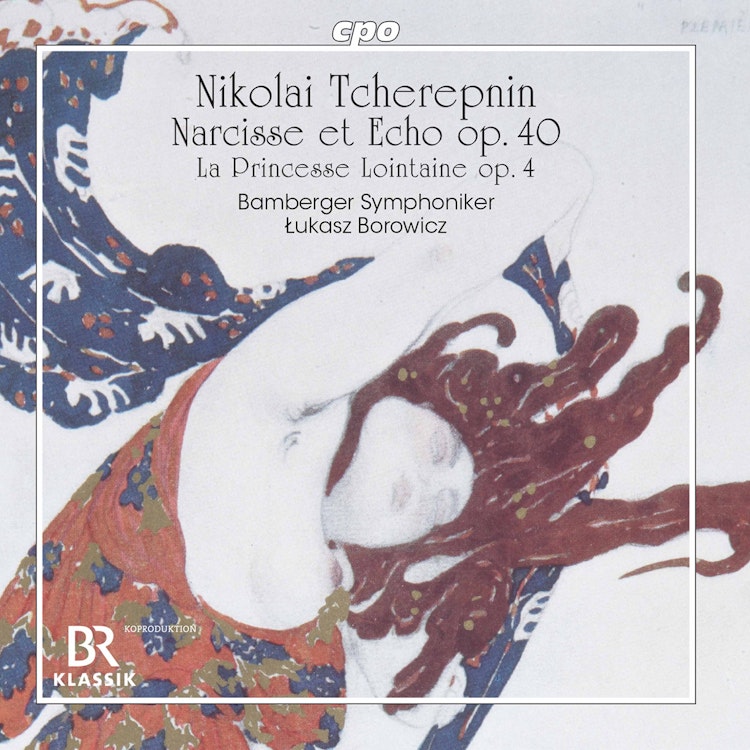
Tcherepnin: Prelude to "La princesse lointaine", Op. 4 & Narcisse et Echo, Op. 40
6/5/2020, 32 Tracks, 56:50
Featuring
Łukasz Borowicz
Moon Yung Oh
Bamberger Symphoniker
Vocal ensemble
Nikolai Tcherepnin
Did you know?
1/7
Historical Context
During World War II, Tcherepnin was so impoverished that he burned the orchestral parts of his Sinfonietta to heat his apartment.
Compositional Technique
In his ballet 'Narcisse et Echo', Tcherepnin used symmetrical chord divergence when Narcissus sees his reflection, mirroring the visual effect in the music.
Cultural Impact
Tcherepnin's most famous work, the ballet 'Pavillon d'Armide' (op. 29, 1903), was the starting point for Sergei Diaghilev's legendary Ballets Russes.
Composer Biography
Tcherepnin studied composition with Nikolai Rimsky-Korsakov at the St. Petersburg Conservatory, graduating in 1898.
Performer Biography
The Bamberg Symphony, founded in 1946 by ex-members of the German Philharmonic Orchestra Prague, traces its roots back to Mahler and Mozart.
Composer Biography
Nikolai Tcherepnin, born in 1873, was the son of a famous physician who was Fyodor Dostoevsky's personal doctor and knew composers Modest Mussorgsky and Alexander Serov.
Composer Biography
Sergei Prokofiev, who dedicated several works to him including his First Piano Concerto, was among Tcherepnin's students at the St. Petersburg Conservatory.
You might also enjoy...
Bartók: The Miraculous Mandarin
Milhaud: La Creation Du Monde / Le Boeuf Sur Le Toit / Suite Provencale
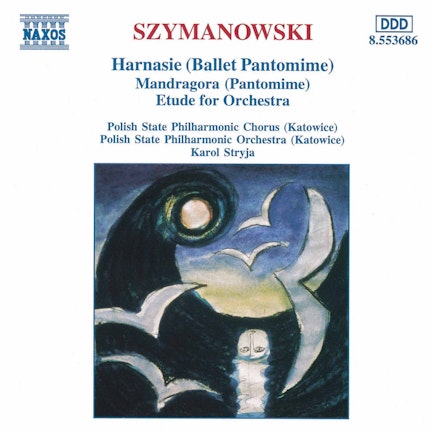
Szymanowski : Harnasie / Mandragora / Etude
Szymanowski: Harnasie / Mandragora / Etude for Orchestra
Icelandic Works for the Stage
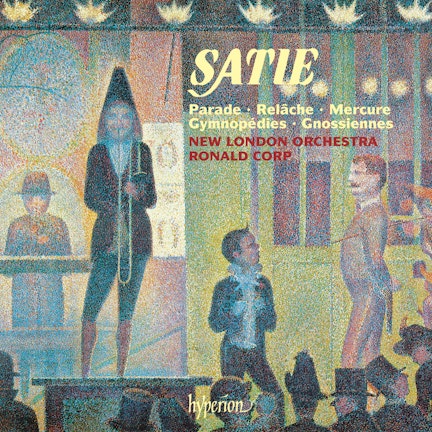
Satie: Parade, Gymnopédies, Gnossiennes & Other Works for Orchestra
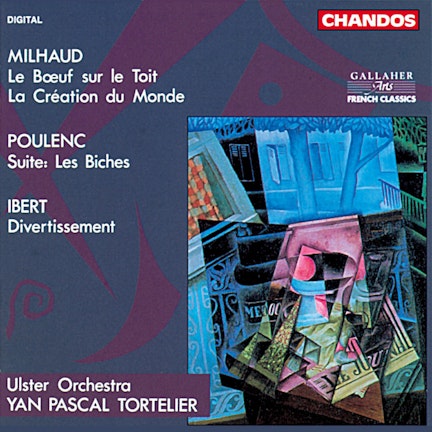
Poulenc: Les Biches / Ibert: Divertissement / Milhaud: Le Boeuf Sur Le Toit
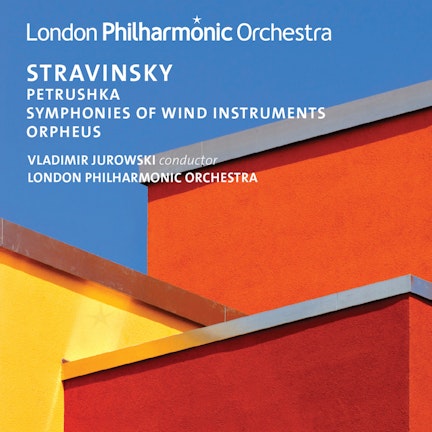
Stravinsky: Petrushka & Orpheus
Stravinsky: The Rite of Spring
Menotti: Apocalypse / Fantasia for Cello and Orchestra / Sebastian: Suite
Stravinsky: Apollo / Concerto for Strings; Prokofiev: 20 Visions Fugitives