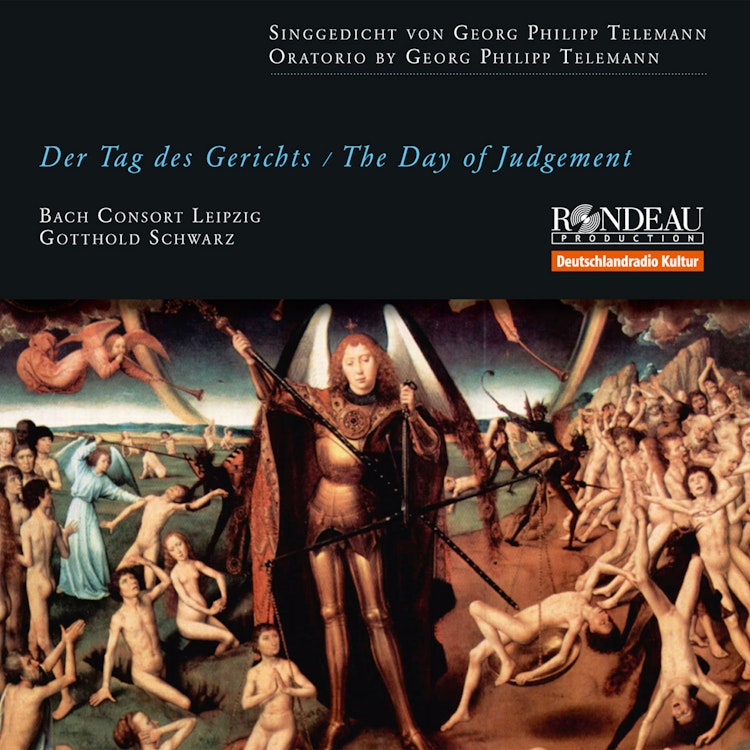
Telemann: Der Tag des Gerichts (The Day of Judgement)
3/3/2014, 34 Tracks, 1:13:03
Featuring
Gotthold Schwarz
Siri Thornhill
Susanne Krumbiegel
Tobias Hunger
Bach Consort Leipzig
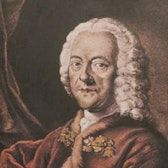
Georg Philipp Telemann
Did you know?
1/7
Historical Context
The closure of the Hamburg Opera in 1738 led to a shift in musical interest towards genres like oratorios and cantatas, which offered moral edification.
Composer Biography
Georg Philipp Telemann, the composer, suffered from poor eyesight in his old age, similar to his colleague Johann Sebastian Bach, and was almost blind.
Compositional Technique
Telemann's 'observations' in 'Der Tag des Gerichts' are described as 'musical paintings', with the many accompagnato recitatives impressively imitating the apocalyptic scenes described in the text.
Composer's Artistic Vision
Telemann's compositional approach prioritized the text, ensuring the music served the theological message rather than being sacrificed for musical effects like trills and coloraturas.
Interpretation
The Bach Consort Leipzig's interpretation aims for a vocal sound-ideal, clear diction, and rhetorical conciseness, with soloists and ripienists collaborating for dramatic expressivity.
Composition History
The text for Telemann's 'Singgedicht' (sung poem), 'Der Tag des Gerichts', was written by Christian Wilhelm Alers, a former student of Telemann at the Johanneum in Hamburg.
Recording & Production
This recording of Telemann's 'The Day of Judgement' was made in the Schlosskirche Torgau, a church whose design was influenced by Martin Luther.
You might also enjoy...
Leo: Dalla morte alla vita di Santa Maria Maddalena (Excerpts) [Live]
Scarlatti: Il giardino di rose
Marcello: Il pianto e il riso
Salieri: La passione di Gesu Cristo
Molter: Oratorio "Höchst schmerzensvoller Tag"
Gasparini, F.: Sapessi Almen Perche / La Lontananza / Sinfonia / Chi Non Sa Che Sia Morire / Dimmi Gentil Daliso
L'aureo Serto
Grand bal à la cour d'Henri IV
Farinelli
Bach, J.S.: Jauchzet Gott in Allen Landen! / Zelenka, J.D.: Psalm 112 (Cantatas for Soprano and Trumpet)