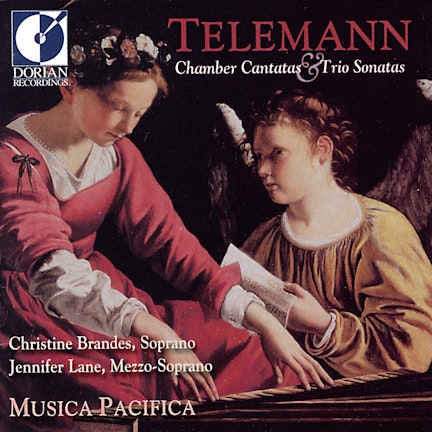
Telemann's cantatas often use characteristic intervals and figures to highlight text, such as a rising fourth for 'Triumph' or a minor third for 'Angst' (fear).
Composition History
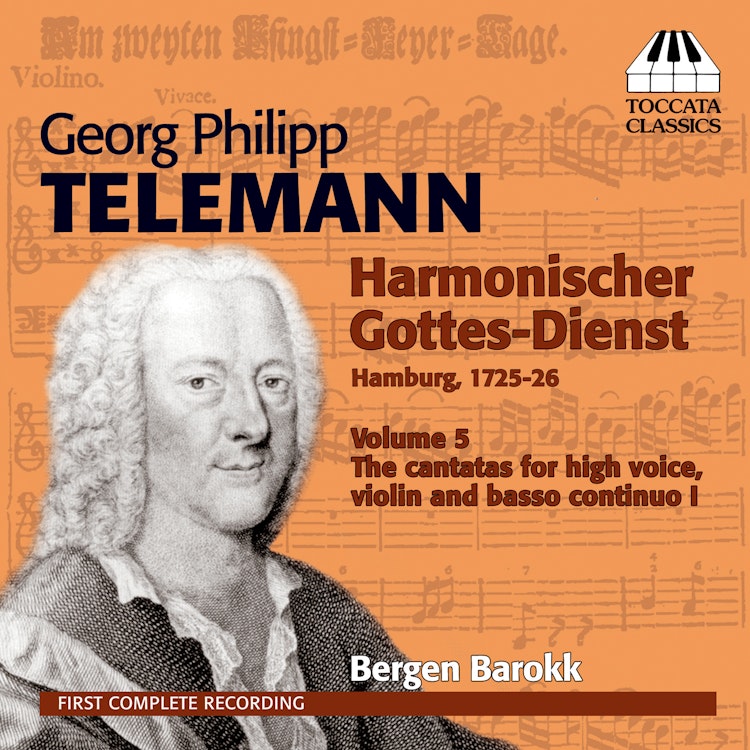
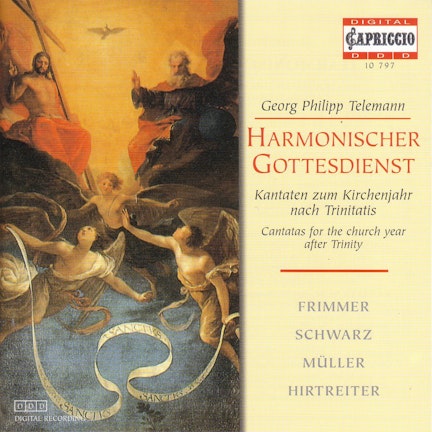
Telemann's Harmonischer Gottes-Dienst, a collection of 72 cantatas for a complete liturgical cycle, was advertised in October 1725 and intended for publication at the start of the new year.
Recording & Production
This recording is part of a larger project, supported by the University of Bergen, focusing on the scientific and artistic study of style, church-music traditions, rhetoric, and phonetics.
Composer's Artistic Vision
Telemann, a practical musician, stated that the cantatas in Harmonischer Gottes-Dienst were suitable for both church and 'domestic scene' use, even providing instructions for instrumental-only performance.
Critical Reception
As late as 1758, Johann Ernst Bach, a lawyer and Kapellmeister in Weimar and J.S. Bach's nephew, noted that Telemann's annual cantata series was performed in most Protestant churches across Germany.
Composer's Artistic Vision
Telemann believed that singing was the foundation of all music, stating that composers must make their movements sing and instrumentalists must be competent singers.
Historical Context
In 18th-century Hamburg, it was common practice to perform one cantata before the sermon and another afterwards, with musicians sometimes circulating between churches for specific instrumentations.
You might also enjoy...
Telemann, G.P.: Cantatas / Missa Brevis
Bach Cantatas No. 54, 82, 170
Telemann, G.P.: Cantatas for Easter and Pentecost (Harmonischer Gottesdienst)
Telemann, G.P.: Cantatas for the Church Year After Trinity (Harmonischer Gottesdienst)