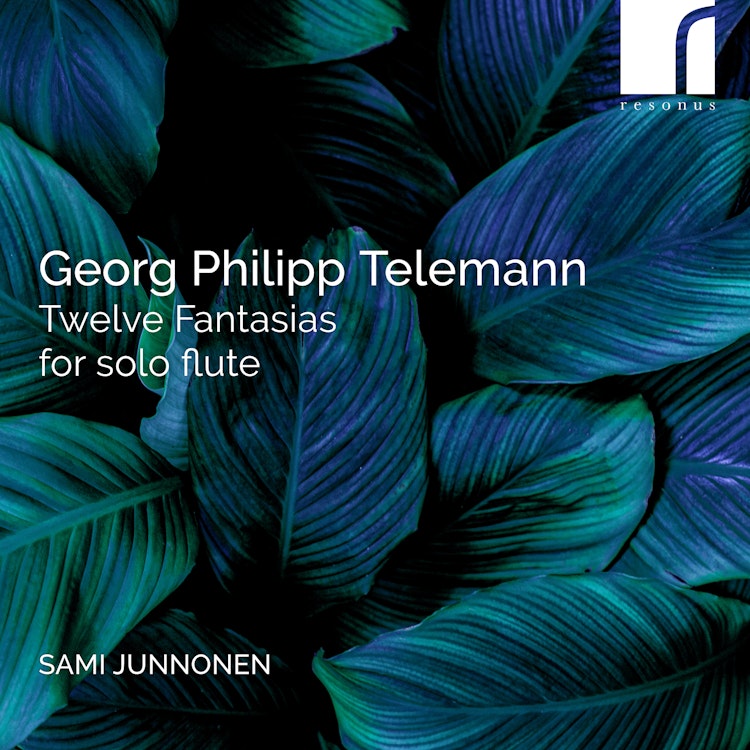
Telemann: Twelve Fantasias for Solo Flute, TWV 40:2-13
5/26/2023, 33 Tracks, 1:00:19
Featuring
Sami Junnonen
Georg Philipp Telemann
Did you know?
1/7
Compositional Technique
Despite being for a monophonic instrument, Telemann conceived these flute fantasias polyphonically, creating the illusion of multiple voices.
Composer Biography
Georg Philipp Telemann was one of the most successful and wealthiest German Baroque composers.
Interpretation
The illusion of polyphony in these solo Fantasias can be created by the performer through skillful management of tonal color, dynamics, expressive phrasing, and articulation.
Instruments
The music in Telemann's Fantasias strongly suggests they were written for the traverso, an 18th-century wooden flute, as they never go below its range and lack double stops or arpeggios.
Composition History
Telemann's Twelve Fantasias for solo flute were likely written between 1727 and 1732, and he may have engraved the copper plates for the sheet music himself.
Recording & Production
The instrument used in this recording is a modern Japanese Muramatsu flute, handcrafted in 24-carat gold, which combines old and new sounds to suit Baroque music.
Compositional Technique
Telemann's Fantasias for flute are systematically structured, with pieces in alphabetical order by key, A to G, major and minor, similar to J.S. Bach's 'Well-Tempered Clavier'.
You might also enjoy...
Telemann: 12 Fantasias for Flute without Continuo, TWV40: 2-13. Maxence Larrieu
Invention No. 13 in A Minor, BWV 784 (Arr. for Recorder & Viola by D. Oberlinger & N. Mönkemeyer)
Telemann: 12 Fantasias for Flute, TWV 40:2-13
Telemann: 12 Fantasias for Flute Solo
Telemann: 12 Fantasias for Solo Flute
Twelve Fantasias for Flute Without Bass
Rolla: 6 Duets for Flute & Violin
W.F. Bach: 6 Duos for Two Flutes
Walckiers, E.: Grand Quatuor De Concert in F-Sharp Minor / Grand Trio for Flute, Violin and Cello (Chamber Music With Flute) (Tetraversi Quartet)
Parafrasi per flauto e pianoforte sulle opere di Giuseppe Verdi