Telemann, a man of wit and humor, uses silence in these Fantasias to structure the music, create suspension, and catch the listener off-guard, contributing to the illusion of real-time creation.
Composition History
Although the title page incorrectly states 'Fantasie per il Violino, senza Basso' and Telemann's name was added in pen, the attribution to Telemann is not doubted due to the musical style and engraving.
Compositional Technique
Telemann's writing for a monodic instrument like the flute manages to suggest harmony, dissonances, and counterpoint, with one Allegro even being a strict fugue.
Compositional Technique
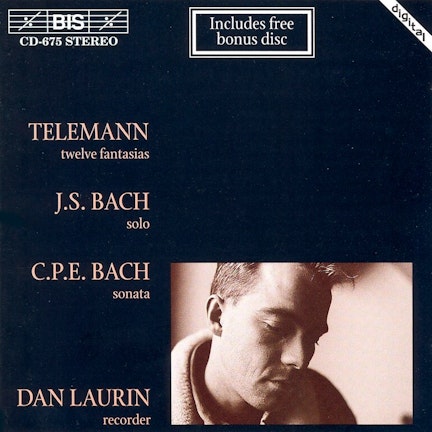
This cycle of 12 Fantasias for solo flute, arranged by tonalities that are natural to the instrument and rising gradually from A to G, is unique in the repertoire.
Interpretation
The flautist in these Fantasias plays multiple roles simultaneously: melodist, bass line performer, and sometimes inner parts, making ornamentation trickier than in works with basso continuo.
Composer's Artistic Vision
Telemann, a fervent champion of the réunion des goûts (mixed style) embracing German, Italian, French, and Polish tastes, covered all genres and national styles of his time.
Composition History
The only printed copy of Telemann's Twelve Fantasias for solo flute is held in the reserve collections of the Bibliothèque Royale of Brussels.
You might also enjoy...
Twelve Fantasias for Flute Without Bass
Telemann: Twelve Fantasias for Solo Flute, TWV 40:2-13