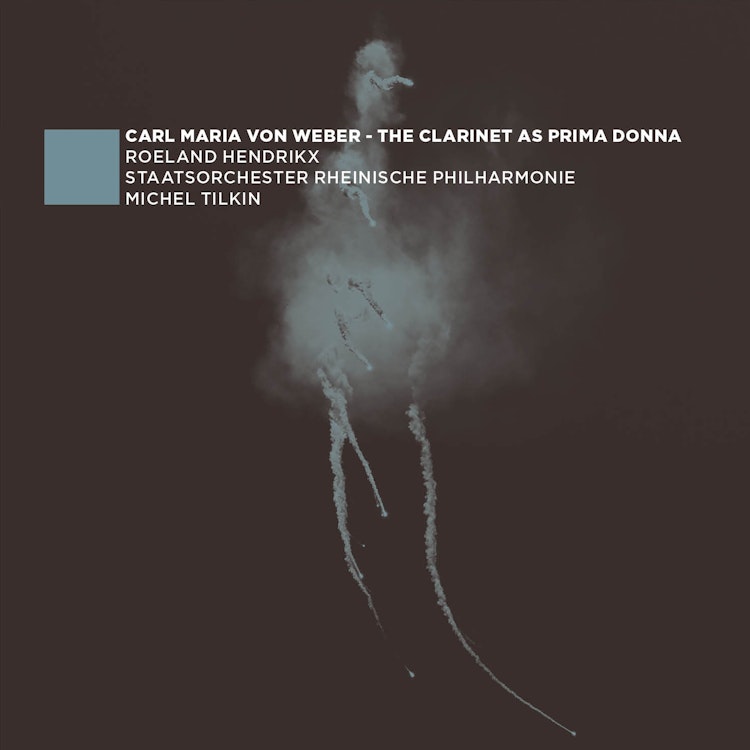
The clarinet as prima donna: Concertos and Opera Extracts
5/5/2023, 8 Tracks, 1:06:15
Featuring
Michel Tilkin
Roeland Hendrikx
Staatsorchester Rheinische Philharmonie
Carl Maria von Weber
Did you know?
1/7
Composer's Artistic Vision
Weber was a pioneer in opera, introducing orchestral rehearsals and becoming the first independent conductor who did not also play an instrument.
Composition History
King Maximilian I Joseph of Bavaria commissioned two clarinet concertos from Weber after being impressed by a performance of Weber's Concertino op. 25, which was written for clarinettist Heinrich Baermann.
Recording & Production
For this recording, composer-arranger Andreas Tarkmann created a new transitional cadenza for the first concerto's Rondo, aiming for a more thematic approach than Heinrich Baermann's ornamental style.
Instruments
Weber was among the first to fully exploit the clarinet's capabilities, recognizing its wide dynamic range and opulent richness of color, allowing it to sound like an oboe or a second flute.
Compositional Technique
Weber's Clarinet Concertos were written with an 'open performance concept' where the composer provided a 'skeletal' clarinet line, leaving the soloist, Heinrich Baermann, to flesh out the part.
Composer Biography
Carl Maria von Weber was a child prodigy, publishing his first work at age twelve and composing a mass and his first opera, which is now lost, in the same year.
Interpretation
The clarinet parts in Weber's concertos have a complex performance history, with Heinrich Baermann's additions and ornamentations becoming a dominant version, even leading his son Carl to suggest a co-compositional relationship.
You might also enjoy...
Crusell: Concertante / Bassoon Concertino / Introduction and Swedish Air