Sylvius Leopold Weiss, the last great composer and player for the lute in Germany, achieved extraordinary renown through his many travels across Europe between 1708 and 1728.
Composer Biography
Johann Sebastian Bach's interest in the lute is evidenced by his friendship with lutenist Sylvius Leopold Weiss and instrument maker Johann Christian Hoffmann, and his design for a lute harpsichord.
Composer's Artistic Vision
Kapsberger and Piccinini's music, characteristic of the early baroque, expresses strong emotional feeling, particularly in their toccatas, which feature free rhapsodic parts known as stylus phantasticus.
Instruments
The lute's advantages over other harmonic instruments included its portability and the possibility of dynamic contrast, which harpsichords and organs could not provide.
Instruments
The lute was the most popular instrument in the 16th century, with published instrumental music most frequently intended for it.
Instruments
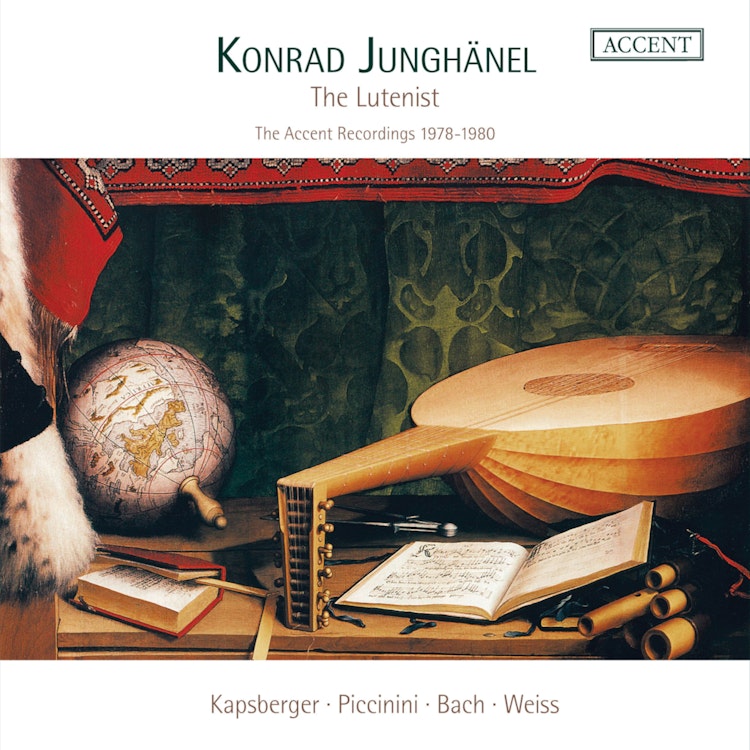
This recording features a ten-stringed lute, a chitarrone (a large lute with extra bass strings), and an archlute (also known as a theorbo-lute), each with distinct stringing and construction.
Compositional Technique
Weiss was admired by his contemporaries for his ability to make polyphonic music audible on the lute, demonstrating that more could be achieved on the instrument than previously believed.
You might also enjoy...
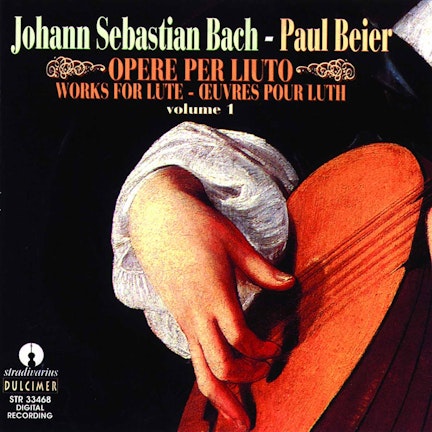
Bach: Works for Lute, Vol. 1
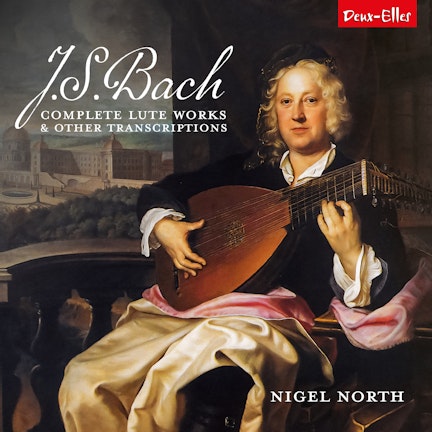
J.S. Bach Complete Lute Works and Other Transcriptions
Weiss, S.L.: Suites in C Minor / G Minor / Prelude and Fugue in C Major