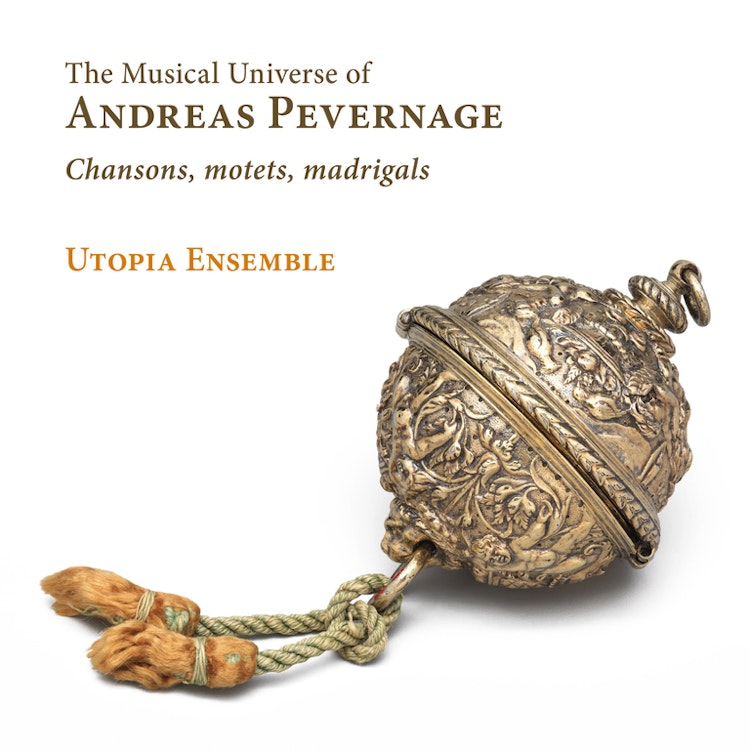
Andreas Pevernage (1542/43-91) held one of the most prominent positions in Antwerp's most important religious institution, the Cathedral of Onze-Lieve-Vrouwe, until his death.
Historical Context
Antwerp became a center for music printing after Susato obtained a patent in 1543, and later saw a resurgence when Christophe Plantin decided to print polyphonic music in 1578.
Critical Reception
Pevernage's chansons enjoyed wide commercial success, with London booksellers buying large numbers of copies, marking the first time polyphonic music from Plantin reached such a wide audience.
Composer's Artistic Vision
Pevernage announced in his first volume that he wanted to keep sacred and secular chansons separate, stating 'so as not to mix heaven and earth'.
Composition History
Pevernage dedicated his Livre troisième des chansons to Antoine de Blondel (c.1550-1603), a nobleman and patron of the arts, on June 15, 1590.
Compositional Technique
Two of Pevernage's motets, Laude pia Dominum and Osculetur me, are 'picture motets' (beeldmotetten), where the music is displayed within engraved illustrations and forms an integral part of the design.
Composition History
Pevernage compiled the anthology Harmonia celeste in 1583, drawing on madrigals from 29 Italian and Franco-Flemish contemporaries like Marenzio, Palestrina, and Lassus.
You might also enjoy...
Philippe De Monte: Madrigals and Chansons
Tenebrae
De Ribera & Navarro: Masters of the Spanish Renaissance
Isaac: Missa super "O praeclara", Motets & Songs
Daser: Missa Pater noster: IV. Sanctus: a. Sanctus
Messe de requiem: Sanctus
F. A. Baseo: Il primo libro dei Madrigali a cinque voci (Venezia, 1582)