The Welte-Mignon system was considered a 'new wonder of the world' by the press after its first demonstrations in 1904, at a time when music recording was in its infancy.
Interpretation
Richard Strauss's playing on these rolls is described as natural, undemonstrative, with organic flow, fine nuances, and elegance in phrasing and rhythm, reflecting his minimalist conducting style.
Instruments
The Welte-Mignon player piano could be built into famous piano brands like Steinway, Bechstein, and Blüthner, or used as a 'Vorsetzer' (a unit placed in front of any instrument) with felt-lined wooden fingers.
Recording & Production
The Welte-Mignon player piano system, invented in 1904, allowed for the recording and reproduction of pianists' performances with all their rhythmic and dynamic nuances.
Composer Biography
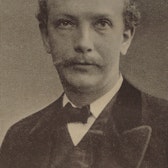
Richard Strauss recorded these piano rolls on February 16, 1906, in Leipzig, when he was 41 years old and enjoying the immense success of his opera Salome.
Recording & Production
This album features Richard Strauss's 1906 interpretations of his own works, played on a modern Steinway piano through a Welte-Mignon player piano system.
Composer's Artistic Vision
Richard Strauss expressed great admiration for the Welte-Mignon, writing to Welte that it was "a quite exceptional invention, the only one of all such instruments that can satisfy artistically."
You might also enjoy...
Copland, A.: 4 Piano Blues / Piano Sonata / Gershwin, G.: 3 Preludes / Songs
Dvorák: Complete Piano Works
Tales of the Jazz Age
Fauré en héritage
Palmgren: Complete Piano Works, Vol. 6
Volver
20th Century Foxtrots, Vol. 2
Wolf, H.: Piano Music (Wagner Paraphrases and Other Piano Pieces)