George Mgrdichian's 1967 New York City debut recital at Town Hall led to an invitation to perform with the New York Philharmonic, marking the first appearance of the oud with a major symphony orchestra.
Recording & Production
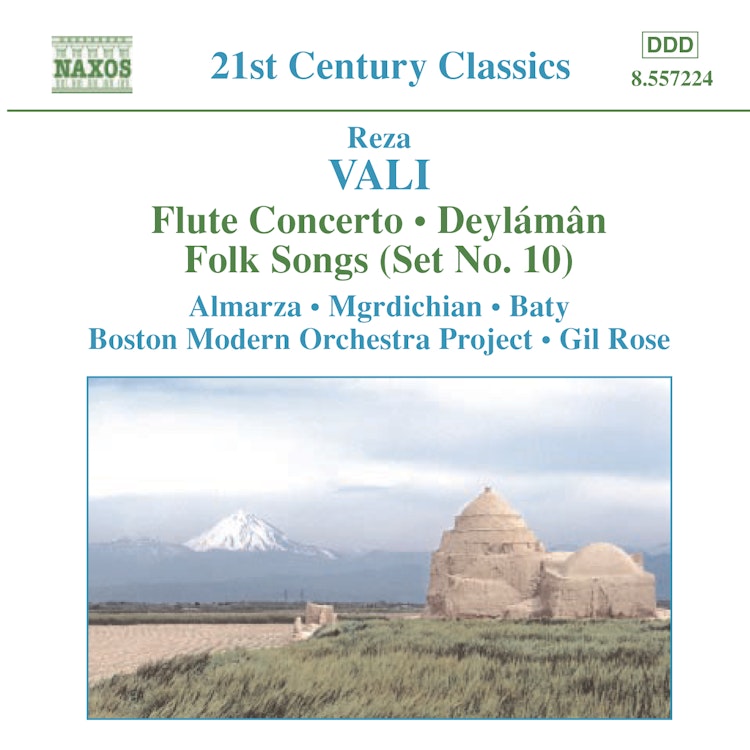
The Boston Modern Orchestra Project (BMOP), which performs on this album, is one of the few orchestras in the United States dedicated exclusively to performing music of the twentieth and twenty-first centuries.
Performer Biography
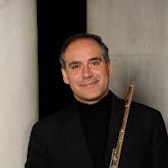
George Mgrdichian, who plays the bárbát (oud) on this recording, is credited with taking the oud from the cabaret to the concert stage.
Composer's Artistic Vision
Reza Vali's compositions frequently draw influences from Persian classical and folk music, as seen in his Flute Concerto and Folk Songs (Set No. 10).
Composer Biography
Reza Vali, the composer, was born in Ghazvin, Persia (Iran) in 1952 and began his music studies at the Tehran Conservatory of Music.
Compositional Technique
In his Flute Concerto and Deylámân, Reza Vali uses a technique of simultaneous playing and singing on the Western flute to imitate the sound of the Persian bamboo flute, the ney.
Compositional Technique
Deylámân, a piece by Reza Vali, incorporates short musical quotations from European composers like Beethoven, Bruckner, Mahler, and Wagner, as well as African and Peruvian folk songs.
You might also enjoy...
Thea Musgrave: Turbulent Landscapes, Songs for a Winter's Evening & Two's Company
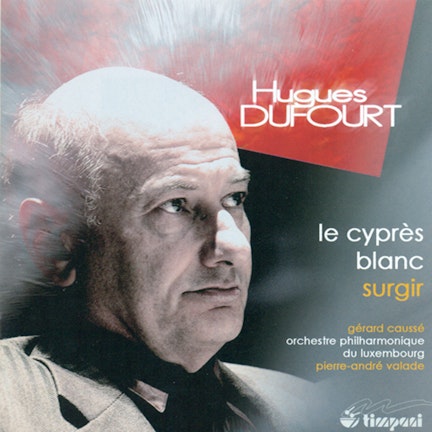
Dufourt, H.: Cypres Blanc (Le) / Surgir
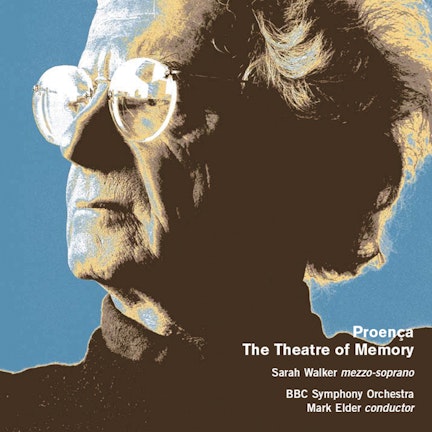
John Buller: Proença & The Theatre of Memory
Salvatore Sciarrino: Orchestral Works
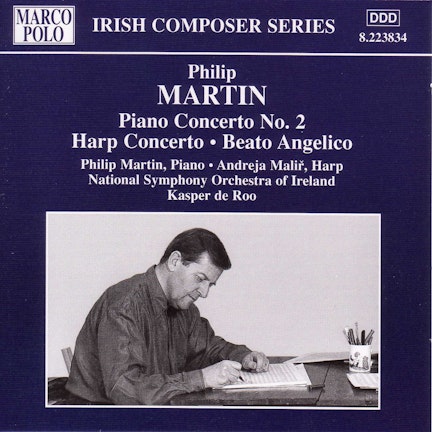
Martin: Piano Concerto No. 2 / Harp Concerto / Beato Angelico
Berg: Chamber Concerto, Three Pieces for Orchestra, Op. 6 & Five Orchesterlieder, Op. 4
Boulez Conducts Berg
Dutilleux: Correspondances
Dutilleux: Correspondances
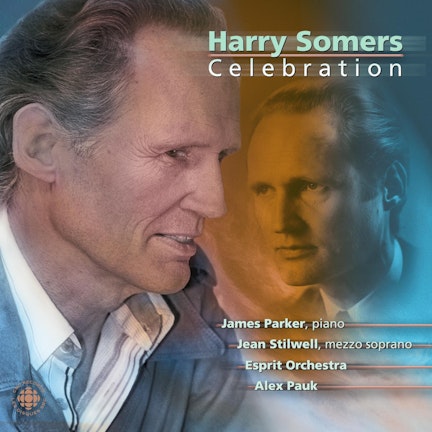
Somers: Celebration
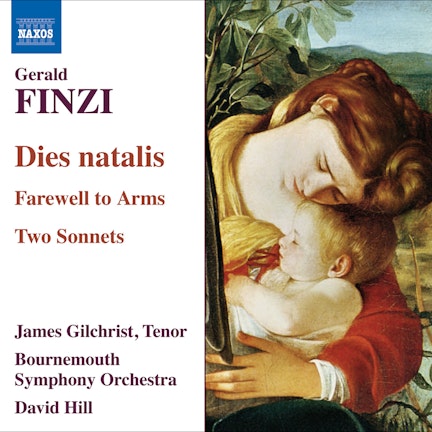
Finzi: Dies Natalis / Farewell To Arms / 2 Sonnets
Maxwell Davies: Trumpet & Piccolo Concertos
Errollyn Wallen: Orchestral Works
Mahler: Das Lied von der Erde - Busoni: Berceuse élégiaque