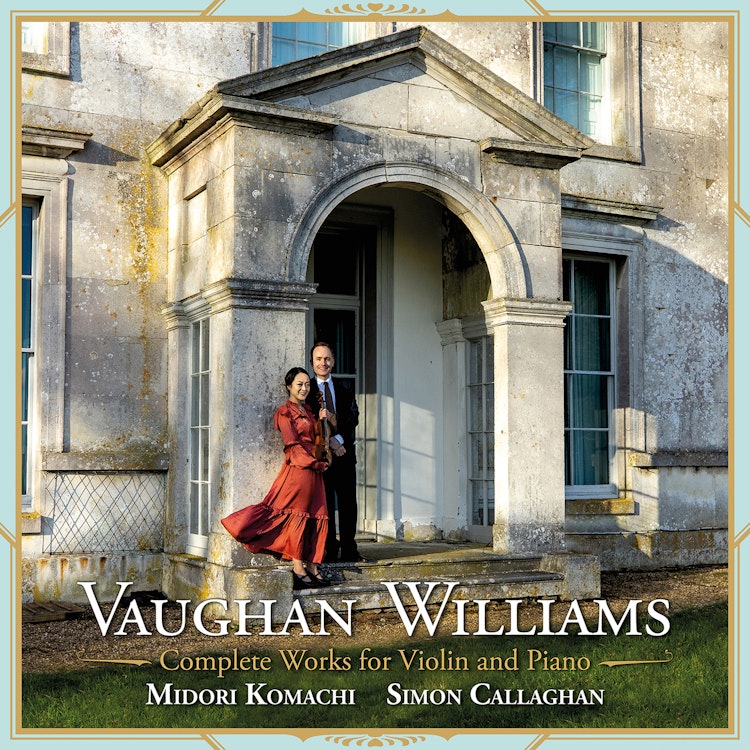
Vaughan Williams: Complete Works for Violin & Piano
7/1/2022, 12 Tracks, 1:01:04
Featuring
Midori Komachi
Simon Callaghan
Ralph Vaughan Williams
Did you know?
1/7
Compositional Technique
Vaughan Williams learned from Maurice Ravel "how to orchestrate in points of colour rather than in lines," which influenced his exquisite balance of melody and harmonic colour.
Composer Biography
Vaughan Williams dedicated his life to serving others, collecting over 800 folk songs, volunteering in the First World War, and setting up a committee to host refugees in the Second World War.
Composition History
The pieces Romance and Pastorale were written around 1912-1914 but were not published until 1923 due to the First World War.
Composer Biography
Ralph Vaughan Williams, the composer, began violin lessons at age seven, but later favored the viola; however, his family's background led him to become an organist instead of a string player.
Composer's Artistic Vision
Vaughan Williams believed that music, especially folk music, expresses the soul of a nation, defining a nation as a community spiritually bound by language, environment, history, ideals, and continuity with the past.
Composition History
Vaughan Williams's Six Studies in English Folk Song were originally written for cello and piano in 1926, and then arranged for violin the following year.
Composition History
The Sonata for Violin and Piano was inspired by violinist Frederick Grinke's performance of The Lark Ascending, and Grinke also helped refine the Sonata's technically demanding passages.
You might also enjoy...
Goedicke: Music for Violin & Piano
Szymanowski: Violin Sonata in D minor, Nocturne and Tarantella & Myths
Between 1945 and 1960: Albrecht, Schweppe, Seiber
Fuga: Violin Sonatas Nos. 1-3
Enescu: Impressions D'Enfance / Violin Sonatas Nos. 2 and 3
Freitas Branco: Violin Sonatas Nos. 1 & 2
Crossroads: American Violin Sonatas
Renato Wiedemann: Roots. 20th Century Violin Sonatas from Brazil and Switzerland
Bloch: Violin Sonatas Nos. 1 & 2 etc.
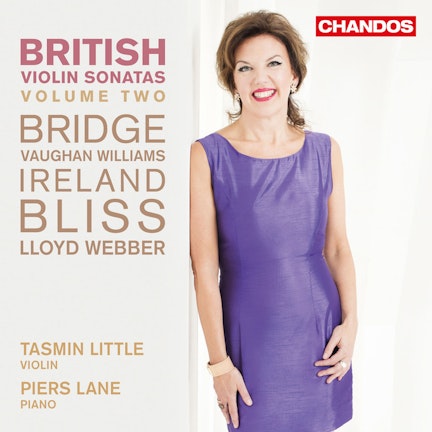
British Violin Sonatas, Vol. 2
Bloch: Violin Sonatas Nos. 1 and 2 / Suite Hebraique