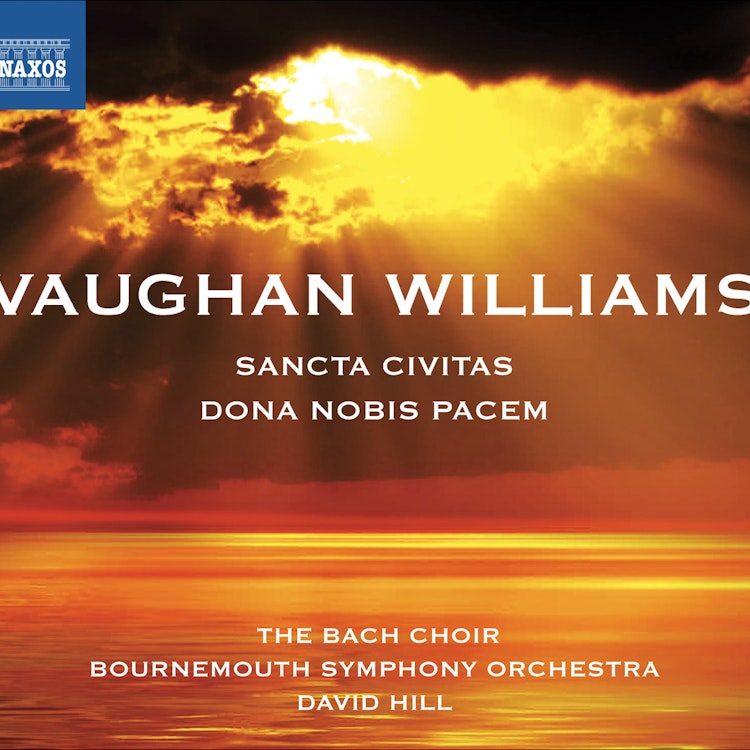
Vaughan Williams: Dona Nobis Pacem - Sancta Civitas
10/27/2010, 16 Tracks, 1:04:27
Featuring
David Hill
Christina Pier
Matthew Brook
Andrew Staples
Bournemouth Symphony Orchestra
The Bach Choir
Winchester Cathedral Choir
Winchester College Quiristers
Ralph Vaughan Williams
Did you know?
1/7
Composition History
Sancta Civitas, an oratorio by Vaughan Williams, was composed between 1923 and 1925, setting words from the Book of Revelations with additions from Taverner's Bible.
Historical Context
Dona nobis pacem is both a prayer for mankind to discard warfare and a warning about the unstable political situation of the 1930s sliding towards another war.
Composer's Artistic Vision
Vaughan Williams, who described himself as 'a cheerful agnostic', used biblical texts in Sancta Civitas as powerful symbols, reflecting humankind's destructive nature and severance from the natural order.
Compositional Technique
Sancta Civitas is Vaughan Williams's only choral work designated as an 'oratorio', and it features a bold use of choral forces including a full chorus, semi-chorus, and a distant chorus of boys' voices.
Composer's Artistic Vision
From the beginning of his career, Ralph Vaughan Williams aimed to create music that would break away from European traditions, drawing inspiration from English folk-song and Elizabethan/Jacobean music.
Composition History
Dona nobis pacem, a cantata by Vaughan Williams, was composed in 1936 for the Huddersfield Choral Society's centenary concert.
Composer Biography
Ralph Vaughan Williams, the composer, studied at the Royal College of Music and Cambridge, with teachers including Parry, Stanford, and later Ravel in Paris.
You might also enjoy...
Elgar: The Music Makers, Op. 69 & The Spirit of England, Op. 80