Ralph Vaughan Williams's Mass in G minor, though premiered by the City of Birmingham Choir, established its reputation through its first liturgical performance in 1923 by Richard Terry, the founder of the Westminster Cathedral Choir.
Critical Reception
Vaughan Williams's Mass in G minor was considered the first substantial, unaccompanied setting with a distinctly English voice since William Byrd in the 16th century.
Compositional Technique
Vaughan Williams's Mass in G minor takes inspiration from 16th-century modal writing and subtle imitation, similar to his 'Fantasia on a Theme by Thomas Tallis,' using two four-part SATB choirs in dialogue with a solo SATB quartet.
Composer Biography
Ralph Vaughan Williams, despite being the son of an Anglican clergyman, developed a deep-seated skepticism from an early age, describing himself as a "cheerful agnostic."
Composer's Artistic Vision
Judith Bingham's Mass is both a narrative journey, based on Christ's encounter with the Apostles on the road to Emmaus, and a celebration of the Eucharist.
Composer's Artistic Vision
Vaughan Williams believed that an atheist could write a good mass, and his Mass in G minor successfully blended a modern idiom with an old liturgical spirit.
Composition History
Judith Bingham's Mass was commissioned by Westminster Cathedral in 2003 for Ascension Day and recently received a British Composer Award for Liturgical Music.
You might also enjoy...
Howells: Choral Works
English Choral Music
Howells: Requiem – Vaughan Williams: Mass in G Minor
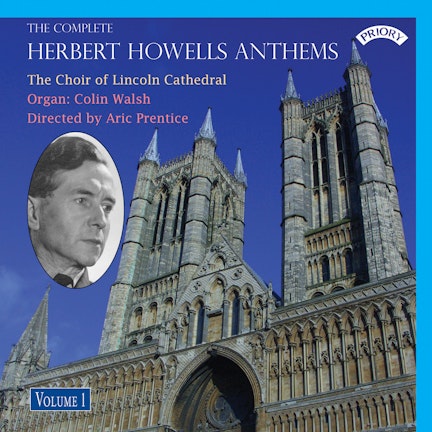
The Complete Herbert Howells Anthems, Vol. 1
Great is the Lord
Twentieth Century Church Music
Walton: Coronation Te Deum; Missa brevis; A Litany & Other Choral Works